


Running a VPS reseller program is one of the fastest ways to create recurring hosting income, without having to own any physical servers. If set up correctly, it allows you to create your own VPS reseller program, white-label or resell VPS hosting solutions.
Create your own margins and grow your VPS hosting customer base as and when you need to.
While there are many different types of reseller arrangements, including those built around VPS hosting, at their core they all rely on the services of an underlying provider or hosting company.
In this guide we cover the ins and outs of VPS reseller hosting, look at key terms in both contract and technical, highlight what types of workloads are particularly suited to reselling. Additionally, look at the underlying physical server infrastructure of any reseller offer, including that offered by BuyVPS to IT teams and developers looking to start up. managed hosting business .
What is a VPS reseller program and how does it work?
A VPS reseller program allows you to purchase a VPS in bulk from a hosting provider at a wholesale rate and then sell it to your customers as if it were your own product. With a VPS reseller server, you decide your own margins, serve your customers as you see fit and enjoy the benefits of being a reseller, without the need to purchase, manage or maintain any physical hardware.
First month $1
Then the normal monthly price. One per customer. No setup fee, and a 30-day performance guarantee on your first order.
See the plans“Excellent experience from start to finish! The server was delivered promptly, and the service was reliable and efficient. I m very happy with the results and would definitely recommend them.”
What is a VPS reseller hosting program?
A reseller account is essentially a block of VPS servers which are sliced from an upstream provider’s single parent server. Each VPS server is isolated and has its own CPU, RAM and disk space. A reseller can then allocate this out to individual clients, providing them with fully independent and separate servers. For more context, see Web hosting service.
Reselling VPS hosting models differ from those of shared hosting reselling. Shared hosting reselling involves reselling shared hosting accounts on top of an existing shared hosting account, unlike a virtual server setup, where account resources are shared at the OS level. In VPS reselling, each client gets a virtual private server with guaranteed resources that cannot be used by neighboring clients and are isolated at the kernel level.
How resource allocation and billing work
Each instance runs as a fully separate environment, giving users root access to each client instance.
Billing for a VPS reseller server typically flows in two different directions, you pay an upstream provider a fixed monthly charge and you bill your customers on whatever schedule and with whatever markup you desire.
Why this beats building from scratch
By launching a reseller hosting business through a well established platform you can avoid the capital expenditure for the servers, the networking and the data center contracts. You can then concentrate on building good relationships with your clients and providing a good service. The infrastructure is already running. Many entrepreneurs choose to become a VPS reseller precisely because the technical barriers to entry are minimal compared to building out physical infrastructure from scratch. This fully managed approach allows resellers to focus on customer acquisition and support rather than server maintenance and hardware troubleshooting.
Resellers can also white-label the service under their own brand, creating a seamless customer experience without revealing the upstream provider. Most providers also include a control panel interface that simplifies server provisioning and client account management for resellers without technical expertise. Most providers also include a cpanel interface that simplifies server provisioning and client account management for resellers without technical expertise. This white label capability enables resellers to build brand equity and customer loyalty without disclosing their upstream infrastructure partnerships.
Our KVM-based virtual private server solutions are deployed in Amsterdam and New York and offer resellers NVMe RAID10 storage, hard memory caps per node as well as in-place upgrades without any IP rotation for their customers.
VPS reseller hosting vs shared hosting: key differences
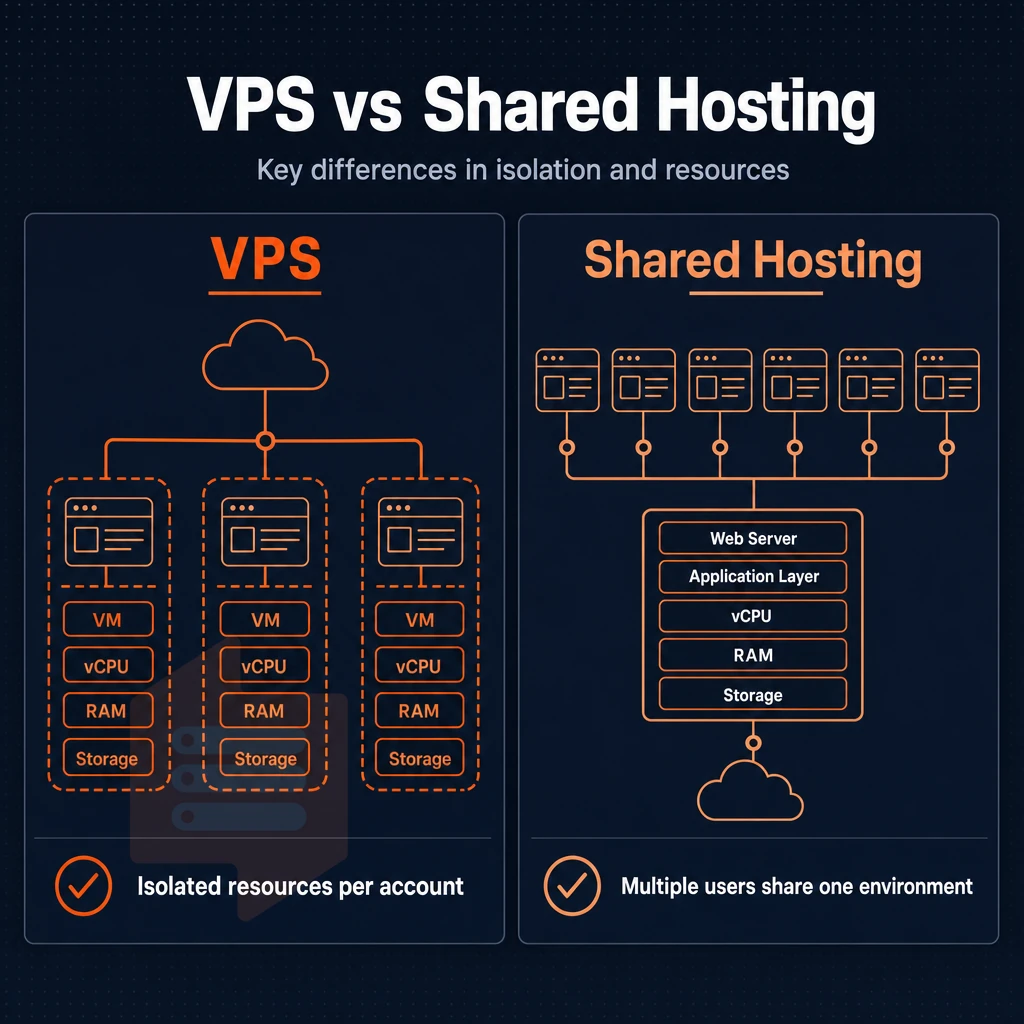
Understanding the inner workings of a reseller account is one thing. Knowing why isolating VPS accounts from each other and thus upgrading them from shared hosting space is key to selling that to your customers. Most shared hosting accounts reside on one big server with hundreds of other accounts.
In shared environments, all users split the same CPU, RAM, and I/O.
Virtual private server resource isolation and root access
Typically a shared hosting account is a slice of a shared server pool, with the customer having no control over resources, and restricted by the hosting provider’s software and configuration. A VPS reseller account on the other hand provides a dedicated allocation of vCPU cores, RAM and high performance NVMe storage. The customer has Root access to install software, configure firewalls and fully manage their own server.
Most VPS providers also include a control panel option such as cPanel or Plesk, allowing resellers to offer their clients an intuitive interface for managing domains, email accounts, and databases without command-line expertise. Many resellers choose to include cpanel licenses in their VPS packages because it simplifies server administration for clients who lack command-line experience.
Virtual private server performance predictability
A noisy tenant on shared hosting can cause performance issues when CPU usage spikes. A VPS however has hard capped resources at the hypervisor level. This means that with VPS hosting, regardless of what other accounts are running on the node, latency and throughput remain consistent and are suitable for production business solutions.
Hypervisor-level enforcement of resource quotas prevents one tenant from consuming CPU cycles or memory allocated to another, ensuring predictable performance for all instances on the node. Proper allocation of server resources at the hypervisor layer is what separates true VPS performance from oversold environments that degrade under load.
| Dimension | Shared hosting | VPS reseller hosting |
|---|---|---|
| Resources | Shared pool | Dedicated per client |
| Root access | No | Yes |
| Uptime SLA | Typically lower | Up to 99.8% |
| Scalability | Plan ceiling | In-place upgrades |
Who offers the cheapest VPS reseller hosting?
“Cheapest” is not always “best value” for reseller VPS hosting. Most low-cost providers will “oversell” their nodes to pack as many accounts on a single server as possible to maximize profit, destroying any real performance guarantees that VPS hosting is supposed to offer. Our VPS reseller margin is based on real performance numbers of the provable VPS configurations on low node density servers with hard memory caps.
If your clients are growing past the shared server and are looking for a VPS reseller program, a good starting point would be to build out a reseller program using isolated KVM VPS servers. BuyVPS offers such a platform from two data centers: Amsterdam and New York.
Selecting the right hosting solution depends on evaluating your clients' technical requirements, expected traffic patterns, and budget constraints before committing to a provider. Resellers can rebrand the entire hosting experience as their own white label solution, presenting BuyVPS infrastructure under their company name and custom branding to clients.
How VPS servers power a profitable hosting business
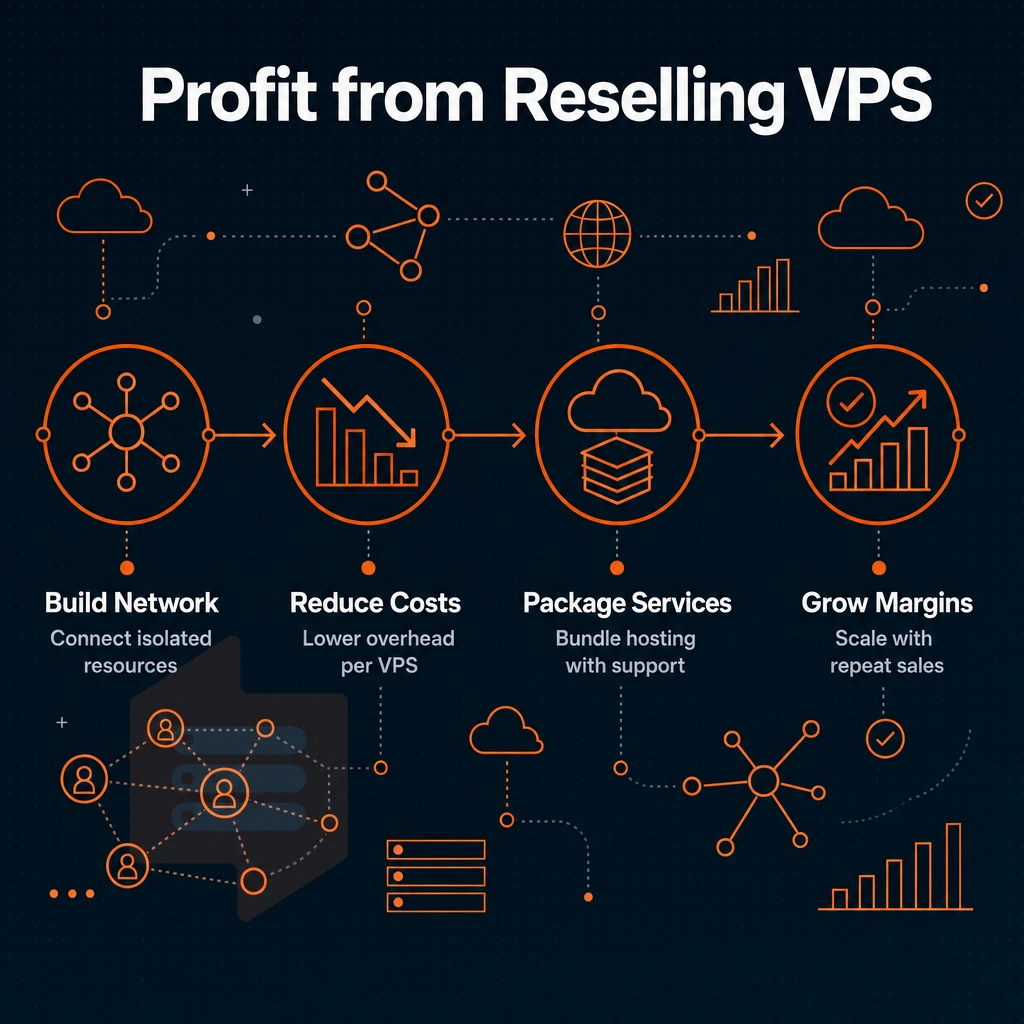
The advantage of isolation can be turned into a profitable service line. VPS servers are the technical core of a reseller hosting offer. Every customer gets his own, isolated, set of virtual servers with a dedicated set of resources. He doesn’t have to share anything with other customers and does not have to fear any noisiness from neighbors.
That’s the basis to charge a lot of money for your own brand and to make it sustainable in the long run. Resellers can white-label the service under their own brand, creating a distinct market identity that builds customer loyalty and recurring revenue. Many resellers choose to white label their VPS offerings to establish brand recognition and customer trust without disclosing the upstream infrastructure provider.
Setting up your own brand reseller foundation
- Choose a wholesale VPS provider. Look for a reliable VPS hosting infrastructure that offers KVM virtualization and NVMe storage. KVM provides each tenant with their own kernel, while NVMe storage ensures optimal I/O performance even under high load. BuyVPS offers VPS hosting from two locations: Amsterdam and New York. This global infrastructure allows us to serve both EU and US client bases immediately.
- Outline your margin structure. Purchase VPS capacity on wholesale rates, and then sell business solutions under your own pricing. The margin between wholesale and retail prices is your margin. Be honest, though: overselling capacity can ruin your reputation quickly.
Note: Never provision more client environments than your underlying VPS can support. Hard memory caps and low node density matter here, they protect every tenant on the node.
How much does a VPS cost per month?
Virtual machines for single customer instances are less expensive than dedicated servers but cost more than shared hosting services. Resellers should evaluate whether the performance and isolation benefits justify the additional cost when positioning VPS offerings to their customers.
Provisioning and white-label delivery
- White-label your control panel. Most resellers offer their clients a custom version of the control panel, and there are many different products available on the market, including cPanel and many others. It is also worth checking with your upstream provider to see what options are available to you.
- Automate provisioning wherever possible. Use a self-service portal that provides API access to set up new accounts. BuyVPS provide an API as well as in-browser VNC access to virtual servers for example.
Note: Automated backups are a common upsell in the reseller market. Verify whether your provider includes them or whether you need a third-party solution before advertising that feature to clients. Strong data protection policies should also be part of your service agreement, ensuring compliance with regional regulations and building trust with enterprise clients.
Many resellers also bundle ddos protection as a value-added service to differentiate their offerings and protect client workloads from volumetric attacks. Resellers should clarify whether backup storage incurs an additional cost or is bundled into the base package pricing to avoid client confusion during onboarding.
Matching VPS services to your business needs
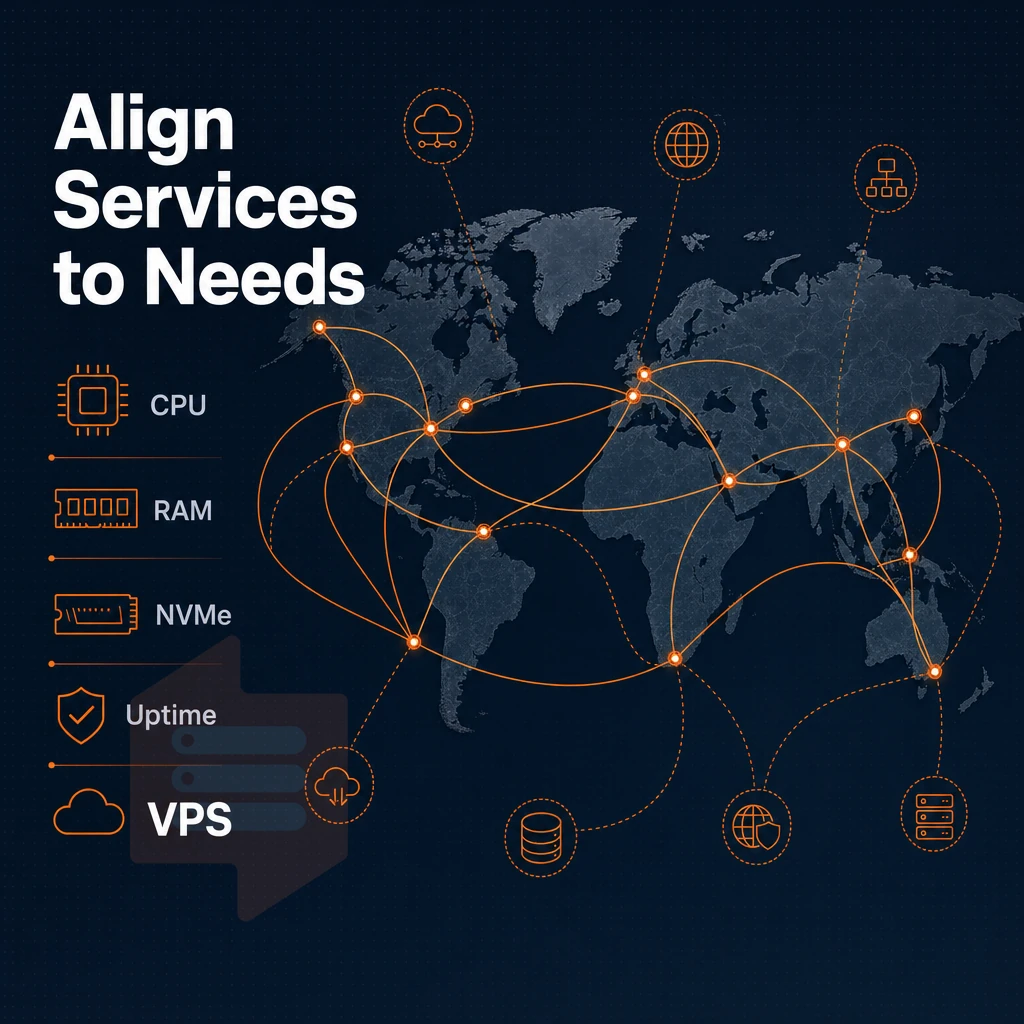
Now that you have a good foundation, start to map your client base to the right VPS packages. As not every workload can run on the same cloud VPS with dedicated resources, start with the right tier for your clients to avoid costly over-provisioning and performance gaps that lead to churn. Clients experiencing growth will eventually require more resources, making it essential to offer seamless upgrade paths that preserve their existing configurations and IP addresses.
Aligning reseller VPS hosting to your reseller model
Web developers managing multiple client sites need VPS hosting for lightweight, fully isolated environments.
Our Dedicated-Core plans deliver predictable performance by avoiding the noisy-neighbor problem.
SaaS companies using single-tenant per-environment models benefit most from dedicated-core isolation.
Matching tiers to workload profiles
IT consultants who bundle hosting with managed services need flexible server configurations for their customers.
In these cases, the 1:8 RAM-to-vCPU ratio of the Standard plans is insufficient to cover the required memory.
We run our NVMe RAID10 storage under load and report 4K read IOPS measured above 120,000. For hosts that rely on databases to serve traffic, storage throughput matters.
Which VPS reseller hosting provider is the best?
When choosing a reseller, the infrastructure must fit your customers' workloads.
Core features to evaluate in any VPS reseller plan

So go through this technical checklist for each of your options before you commit to them scaling.

Virtualization, storage, and network quality
KVM provides separate kernels for separate VPS guests, with guaranteed resources.
NVMe storage provides significant I/O performance improvements over traditional SATA storage.
Network quality drives uptime.
Solutions adapted to your clients' stack
Also custom ISO’s can be uploaded. Full root access is required.
Provisioning can be automated via the API and self-service control panel. In-place upgrades (with no IP rotation) allow you to scale your client’s VPS without having to change their DNS and firewall rules.
Automated backups and support for your virtual private server
Look for automated backups included as a standard feature of any hosting account, not an optional add-on.
A responsive support team is important.
Is it possible to get a free VPS?
Be aware that even free trials and free or low cost entry-level versions of a dedicated server have resource limits, restricted operating system choice and limited timeframes. For a production reseller business you need to subscribe to a paid plan, not a shared hosting package, with clearly defined specs that you know will be available to you on an ongoing basis.
How to start reseller VPS hosting: step-by-step

Evaluating the technical checklist for becoming a VPS reseller is straightforward.
Become a reseller VPS hosting provider: choosing your foundation
Choose a hosting provider with reseller-friendly terms, full root access, and KVM isolation.
VPS reseller plan: structuring your tiers
Associate each tier of your web hosting service with a VPS of a specific size (e.g., CPU, RAM, storage). Leave some headroom for occasional surges, but on higher tiers of service, each virtual server gets more vCPUs and more NVMe storage than just more disk space.
Control panel setup and white-label branding
Deploy your own intuitive control panel brand wrapped around a self managed environment. Web developers can deploy, reboot and take snapshots of servers under any web hosting plan without requiring assistance from our support team, whilst customers see only your company logo and branding.
VPS reseller integrate: onboarding and scaling
Provision individual clients in completely isolated VPS instances from the very first login. No single client can cause a traffic spike to affect another. As your demand scales we can add capacity in real time without IP rotation or any downtime for migration.
VPS reseller hosting vs shared hosting: what is the difference?
A shared web hosting account is typically provided as a single OS instance with no account isolation. A reseller VPS account on the other hand provides each client with their own dedicated kernel and guaranteed RAM.
Because each client gets their own dedicated server environment to manage their full stack, performance is consistently good and one noisy account will not be able to use up all resources and starve out the others. Any serious site or application beyond a simple static HTML site is best run in a VPS environment with account isolation.
Why choose BuyVPS for your VPS reseller hosting business
Following those steps when building your own hosting business narrows the provider decision to one question: which infrastructure can actually deliver on the promises you make to clients? BuyVPS gives VPS reseller hosting businesses a high-performance infrastructure built for client isolation and predictable growth. Our KVM hypervisor runs a separate kernel per VPS, true separation between client environments, not shared-kernel containers. Every virtual private server runs on AMD EPYC hardware with NVMe RAID10 PCIe-direct storage, benchmarked at 122,959 4K read IOPS.
- No-oversell policy: Hard memory caps and low node density mean your reseller VPS instances deliver reliable performance under real load.
- Dedicated CPU tier: Pinned EPYC Genoa cores for latency-sensitive client workloads, no noisy-neighbor risk.
- Full root access + custom ISO: Every VPS plan ships with full root access, giving resellers complete control over each server environment.
- In-place upgrades: Scale a client's VPS with no IP rotation and no migration, uninterrupted service for your reseller business.
- Dual data centers: Amsterdam (EU) and New York (US East Coast), identical hardware, identical pricing, low latency for your global client base.
No renewal price hikes. Engineer-led support. Founder-run since 2002. If you're ready to become a VPS reseller backed by reliable infrastructure, reach out to our support team at support@buyvps.com or compare our VPS reseller plans at BuyVPS.com.
Amsterdam and new york virtual private server locations for resellers
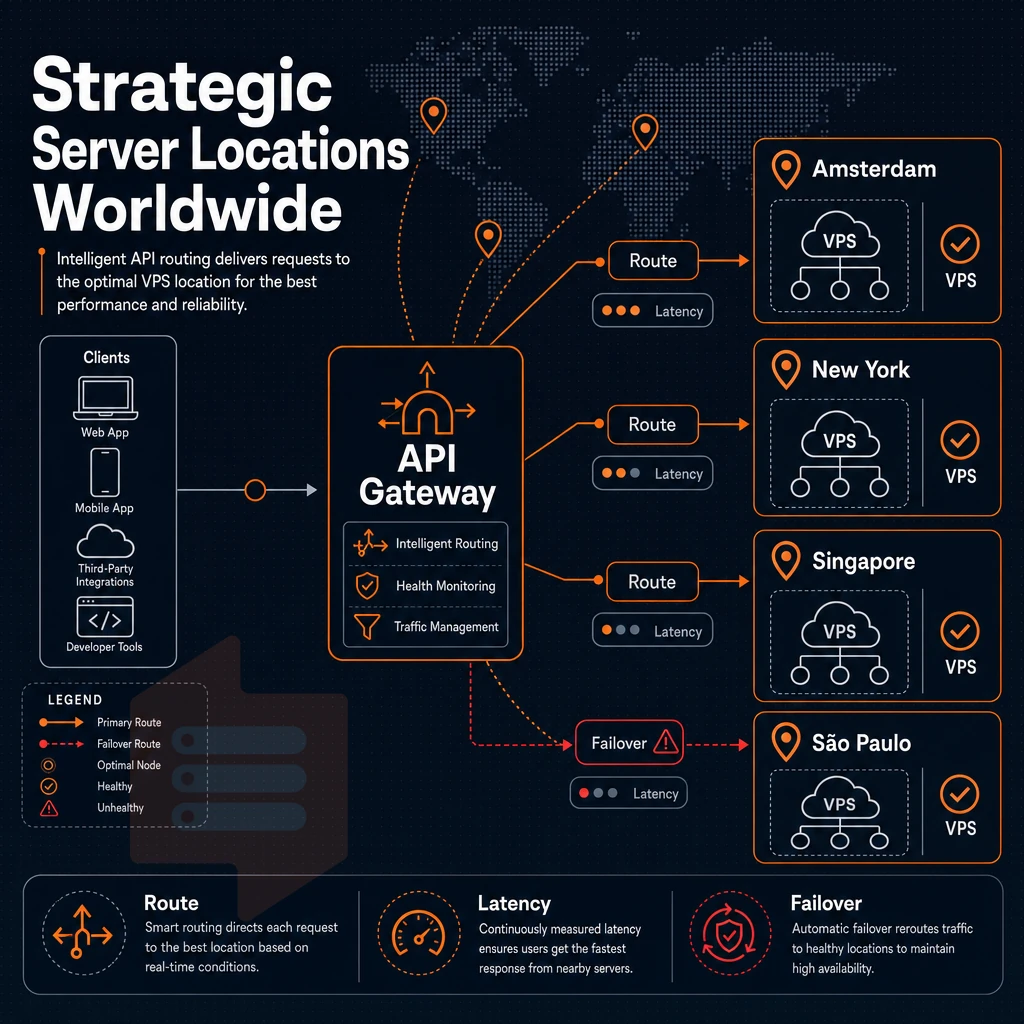
While quality of the underlying infrastructure is important, where it is located is equally important. For a VPS reseller server the largest single factor for performance will be location of the workloads relative to your end users. BuyVPS has two data centers: Amsterdam and New York, each targeted at different reseller audiences.
Amsterdam: EU resellers and gdpr data residency
Low latency to Western and Central Europe makes Amsterdam an ideal web hosting location for SaaS, e-commerce and agency hosting resellers based in this region.
New york: US east coast and transatlantic workloads
New York is a good location for serving US East Coast audiences and for traffic that crosses the Atlantic. Resellers that service North American customers as well as companies running cloud VPS servers that serve customers on both continents will appreciate the good geographic position with low round-trip times to major US East Coast population centers.
Do i need technical skills to become a VPS reseller?
Reselling VPS is not necessarily about building servers to resell to clients. You simply need to understand how to setup and hand over servers to clients. As each VPS runs standalone on the single parent server that they were provisioned on (via KVM), clients cannot use the VPS resources of other tenants.
Provisioning of servers is handled by the self-service panel and the API of our company.
We run identical hardware in both locations and have an identical control plane. Therefore, we can offer identical pricing to our customers. A reseller program covering multiple global data centers carries no operational overhead if all environments are identical.
The core advantages of running a VPS reselling business
The Location and Infrastructure for the Technical Foundation. The Attractive Economics of the Business Model. VPS reselling is a very compelling business model, as it removes the biggest barrier to entry for hosting companies: physical servers.
By leasing VPSes from a host, and white labeling them, you can then be reselling branded hosting services to your clients. To scale, you simply add more VPSes as your client base grows, without needing to get into the physical hosting infrastructure.
Virtual machines are created on a dedicated server with dedicated resources for each guest, meaning your clients won't be fighting over resources on shared servers. For web professionals and agencies, the business economics of reseller hosting are pretty straightforward. Choose a good high-spec host and a strict no-oversell policy and VPS reselling can become a very profitable service line for you.
Success or failure of a VPS reseller program depends on three key factors: the hosting hardware, the hosting provider's network and the reseller program's pricing transparency. multi-tenant hosting reselling trade-off between margin and simplicity; VPS reselling, on the other hand, is a product you can truly stand behind, it's got isolated resources, root access and all that comes with it. Your choice of infrastructure and operating system becomes your foundation, and your clients will feel every constriction and every boost of performance.
These are the key factors that separate a provider that can support a growing reseller business from one that will bring you nothing but grief.
BuyVPS runs KVM-based VPS on AMD EPYC hardware across Amsterdam and New York, with no-oversell guarantees and engineer-led support. Explore the plans at BuyVPS.com and see which tier fits the hosting business you're building.