

Your application grows beyond shared hosting much sooner than you anticipate. Unexpected traffic or poor neighbors consuming your CPU buffers, combined with the lack of kernel and runtime control that a shared hosting company provides, can be deeply frustrating.
VPS (Virtual Private Servers) hosting offers an alternative to dedicated hardware without the higher upfront cost of a fully dedicated server or its long-term commitments. As a VPS hosting customer, you get root access, fully dedicated resources, and full control over your virtualized server's configuration.
Most web hosting companies list similar specs for their VPS servers. For example, a server with 2 vCPUs is not twice as fast as a server with 1 vCPU, if that 1 vCPU is not oversold. The actual performance depends heavily on how the host allocates processing power and whether CPU resources are oversubscribed across multiple tenants. For more context, see Virtual Private Server (VPS) Discussions.
In this guide we're going to cut through the marketing hype around every web hosting plan and look at what really matters to run workloads well in a VPS environment: the virtualization layer, storage, network, support, and upgrade path. Understanding these technical factors will help you choose VPS infrastructure that aligns with your performance requirements and budget constraints.
What is VPS hosting? Run your own email server
VPS (Virtual Private Server) hosting offers a private slice of a physical server complete with isolated resources. A personal operating system and root access, all at a fraction of the cost of renting a full physical server. VPS hosting is typically found between shared hosting and high-end bare-metal servers in terms of control and power.
First month $1
Then the normal monthly price. One per customer. No setup fee, and a 30-day performance guarantee on your first order.
See the plans“Excellent experience from start to finish! The server was delivered promptly, and the service was reliable and efficient. I m very happy with the results and would definitely recommend them.”
Does VPS mean virtual private server on Windows server?
Yes. VPS stands for Virtual Private Server, VPS. A VPS is a virtual private server, a software-defined machine running on top of shared hardware using virtualization. A VPS runs like a dedicated server: it boots an OS, runs processes, and has strict limits on usage of resources such as CPU, memory, etc.
BuyVPS uses KVM to create isolated Virtual Private Servers, allocating each VPS its own kernel so another tenant's workload cannot affect your CPU cycles or RAM. For community perspectives, see Virtual Private Server (VPS) Discussions.
How a virtual server differs from shared and dedicated hosting
With a shared hosting account, all other accounts on the same server are competing for the same CPU time and RAM as you. Thus, a single spike in traffic from another account on the same server can impact your site. When traffic surges occur on neighboring accounts, your site's performance can degrade just as if other websites on the server were consuming your allocated resources.
Unlike VPS hosting where resources are isolated per tenant, shared hosting environments pool CPU, memory, and disk I/O as shared resources across all accounts on the physical machine. In contrast, VPS hosting eliminates the resource contention issues inherent to a shared server by guaranteeing dedicated CPU cycles, RAM allocation, and I/O bandwidth for each virtual instance.
On a VPS, allocations are guaranteed:
- CPU: dedicated vCPU threads, not a shared queue.
- RAM: hard memory caps, your allocation is always available.
- Storage: your own NVMe partition, not a shared disk.
Can i install custom software on a VPS?
Full root access means you have full control over the entire server stack. You can install any packages, compile custom applications and load kernel modules as required. You can even upload your own ISO images to create your own custom servers. The reason developers and sysadmins choose to host on VPS over managed shared servers is because of the flexibility of full root access. In the section below we will outline how the hypervisor ensures isolation at runtime.
How a VPS web hosting service works under the hood
VPS web hosting is provided by using virtualization technology to divide up a physical server into separate virtual servers. Each virtual server operates as if it were a separate physical server, running its own Operating System and utilizing its own pool of resources, without any interference from neighboring virtual servers. Selecting the right operating system for your virtual server is crucial, as it determines compatibility with your application stack and available software packages.
The KVM virtualization technology hypervisor layer
As opposed to shared hosting with all accounts on the same OS instance, each VPS has its own kernel.
Shared vcpu vs. Pinned cores
This is illustrated in the table below.
| Attribute | Shared vCPU | Pinned / dedicated cores |
|---|---|---|
| CPU contention | Possible under load | None, cores are reserved |
| RAM allocation | Hard cap per node | Hard cap per node |
| Best for | Web apps, staging, dev | Databases, latency-sensitive workloads |
| Storage | NVMe RAID10 | NVMe RAID10 |
Both tiers at BuyVPS enforce hard memory caps. The low node density of the shared hosting tier, however, means it will typically outperform typical shared hosting on consistent throughput.
How much does a virtual private server cost?
Costs vary depending on the amount of resources required and the corresponding amount of expertise that is needed to manage them. Compared to basic shared hosting packages, VPS hosting is more expensive but it also offers a lot of dedicated resources, full root access and the possibility to run custom software. Many providers position VPS hosting at an affordable price point that bridges the gap between entry-level shared plans and enterprise-grade dedicated infrastructure.
You can find information on the costs on our plans page.
After examining the VPS option, it helps to compare it against the Shared and Cloud-VM hosting tiers that most teams consider when evaluating server hosting options.
Shared and dedicated hosting vs VPS: key differences
When it comes to web hosting, there are generally three tiers of service that most markets consider: shared hosting, VPS hosting, and dedicated servers. Each of these options will fall on a particular point on the cost vs. isolation tradeoff. Additionally, if you choose a shared hosting solution, where multiple accounts share a single physical server, that falls significantly off from where the VPS option lands, you can generally expect to end up overcharging or under-provisioning your users.
How the tiers compare by operating system
Here is a table outlining the 5 key differences of Shared, Dedicated and VPS hosting.
| Dimension | Shared hosting | VPS | Dedicated hosting |
|---|---|---|---|
| Resource isolation | None, other users share the same pool | Hypervisor-enforced dedicated resources | Full physical isolation |
| Root access | No | Yes | Yes |
| Performance consistency | Variable, noisy-neighbor risk | Consistent, hard caps per VM | Consistent, no sharing |
| Scalability | Limited by plan tier | In-place upgrades, no IP rotation | Hardware-bound; requires migration |
| Typical use case | Brochure sites, low traffic | Apps, APIs, databases, staging | High-compliance or single-tenant workloads |
Managed vs. Unmanaged VPS servers
Typically, a web hosting provider offers two types of management for VPS hosting: managed VPS and unmanaged VPS.
We run our virtual private server VPS in unmanaged mode: our engineers are available to sort out any problems with the underlying infrastructure, but from there on in you're on your own with the OS and up. BuyVPS is designed for developers and ops teams who value freedom above unmanaged services. Our support team is available to troubleshoot hardware, network connectivity, and hypervisor-level issues that affect your virtual instance.
Are VPS servers good for beginners?
Yes, provided you have correct expectations for a VPS.
Note: Start with a small plan. BuyVPS supports in-place upgrades, so you can scale up without migrating or losing your IP address. Once you know which tier fits, the next question is which workload it fits best.
Common VPS solutions and use cases
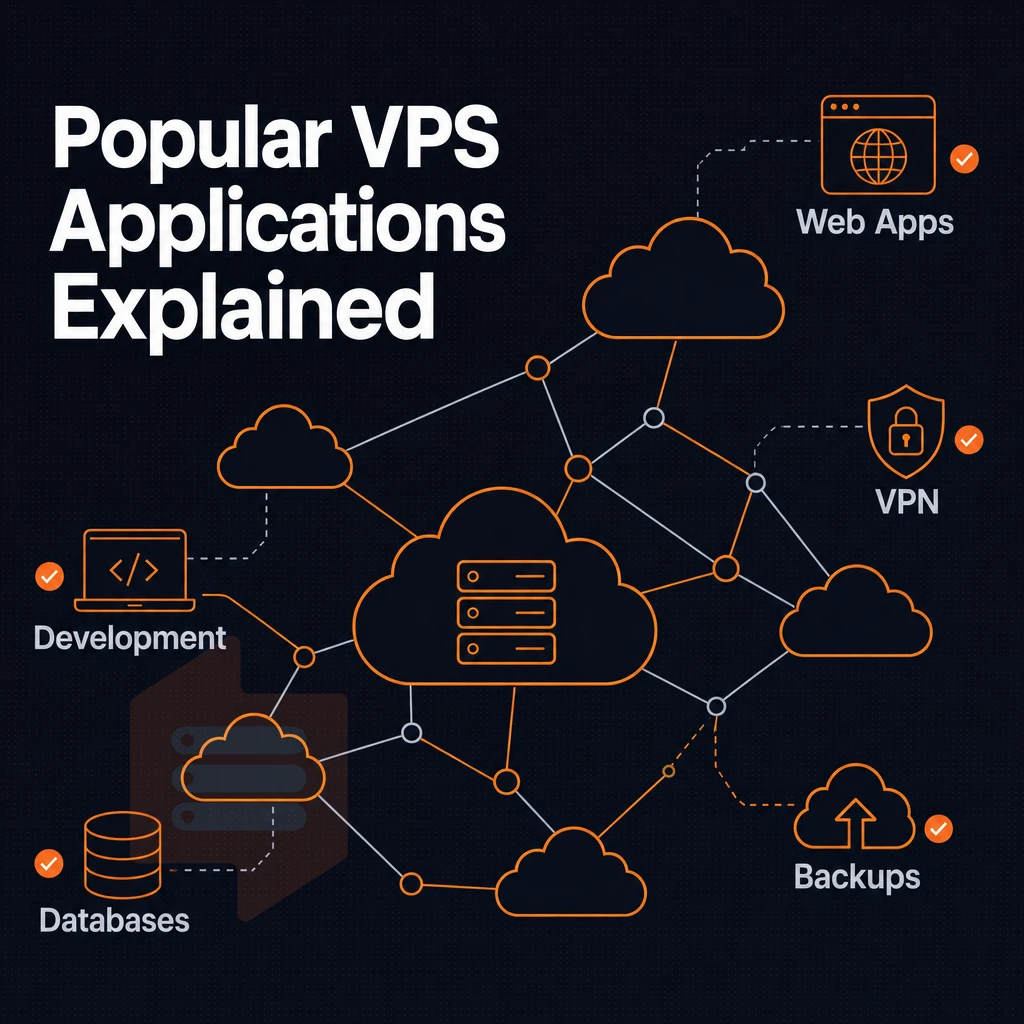
No matter what kind of server load it’s gonna take, a VPS can handle it. The isolated resources and stable performance of a VPS virtual machine make it an ideal platform for just about any type of online application, including web apps, game servers and even data-intensive processes. Below are some of the most common types of deployments and why VPS is so well-suited for each of them.
Whether you're deploying lightweight APIs or resource intensive applications that demand substantial compute power, the dedicated allocation model ensures predictable performance under varying workloads. A VPS environment provides the isolation and dedicated resources necessary to run a web application with consistent performance regardless of traffic patterns.
VPS solutions across real-world workloads
Web hosting, e-commerce web sites, and email servers all require consistent I/O and memory.
Development and test environments can be fully isolated so developers can snapshot, break, and rebuild as needed.
Install custom software without restrictions
Full root access on a server is what distinguishes a shared hosting account from a VPS hosting account.
Most hosting companies lock multiple users into a variety of packages offered through a shared control panel, but with a VPS hosting account, you are able to remove that ceiling. Many VPS providers offer optional control panels like cPanel or Plesk for users who prefer graphical interfaces, though experienced administrators often manage servers directly via command line for maximum flexibility.
Which Windows server virtual private server provider is best?
For example, BuyVPS offers KVM-based VPS hosting on AMD EPYC hardware, delivering dedicated server-grade performance, in Amsterdam and New York datacenters, with NVMe RAID10 storage, hard memory caps per node, and more.
As an unmanaged provider, they offer hard memory caps per node and full root access from the get-go, with engineer-led support and in-place upgrades for production workloads that can’t afford any downtime. Choosing a provider also means choosing how much server management you want to do yourself.
Managed vs unmanaged VPS hosting: which is right for you?
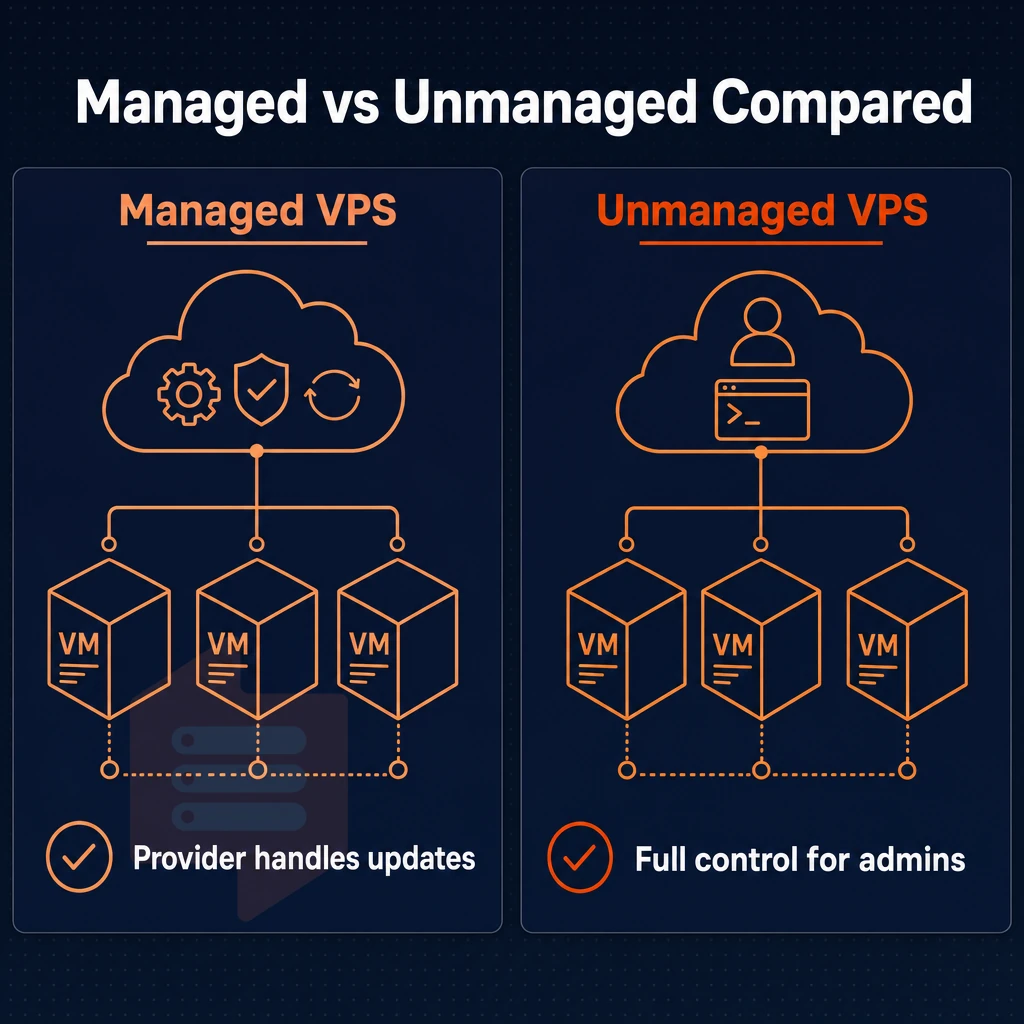
The distinction between managed and unmanaged VPS hosting is one of the first critical decisions that new buyers must make. Making the wrong choice, especially when selecting a virtual machine environment, can result in buyers paying for services they don't need, or inheriting server management problems they aren't equipped to handle.
Managed VPS hosting: control panels with less overhead
With managed VPS hosting, your hosting provider handles OS updates, security patches, server monitoring, and routine maintenance. This cloud hosting model is ideal for projects lacking the technical expertise to manage server settings or a dedicated sysadmin, think small e-commerce shops or startups running CMS-based sites. Many managed providers also include user-friendly control panels that simplify database management, domain configuration, and application deployment without command-line expertise.
This trade-off is real: while many managed web hosting services now offer root access for a premium.
Unmanaged VPS hosting: full control, full responsibility
Unmanaged hosting gives you full administrative access and that’s it. You are left to manage the server, including kernel updates, firewall rules and backups. Developers and sysadmins like to run their applications on unmanaged hosting because it’s the only way to run them without restrictions on the server configuration (the “stack”).
For an example of an unmanaged VPS hosting setup, we show a hardened Debian image with custom Nginx configuration. Most managed web hosting services would refuse to set up a hosting account to run this type of server.
What is the difference between VPS hosting and shared hosting?
In shared hosting, many sites are run from the same OS instance. This means a noisy neighbor can use up all your resources. A VPS hosting plan provides you with a completely isolated environment, with guaranteed amounts of RAM and CPU. And, unlike shared hosting, there is no shared kernel, meaning no resource contention.
BuyVPS takes a hard memory cap per node and keeps the nodes relatively low density to ensure that the isolation a web hosting provider promises to deliver actually gets delivered under load. With our KVM based virtual servers, each VPS has its own kernel. So, half of selecting a good virtual private server provider is figuring out what model of management they provide, and the other half is verifying the specific numbers they promise.
Windows server buying checklist: what to look for in a virtual server
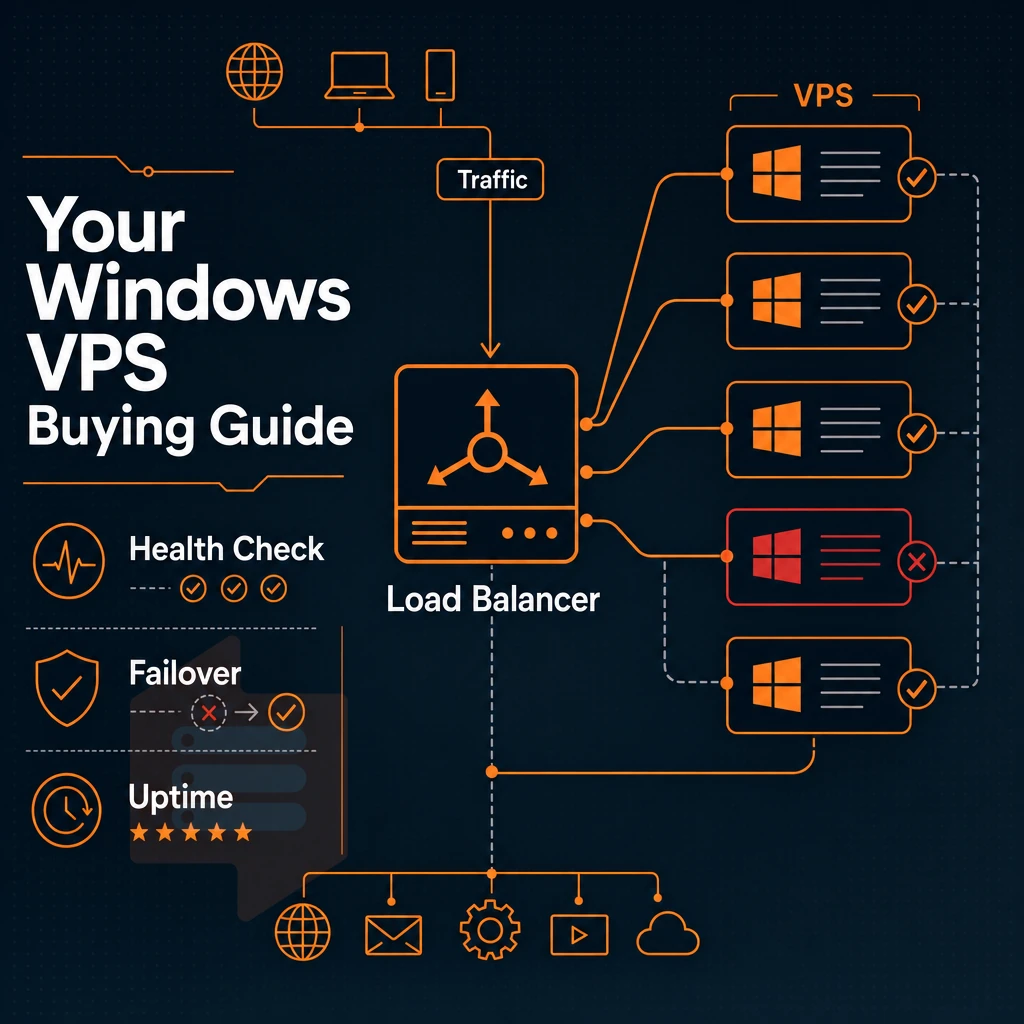
Not all VPS hosting plans are created equal. We recommend you go through this list to help you distinguish between the real deal and a pretty marketing pitch.
CPU, RAM, and storage
Resources on a single physical server are split between users. The only question is, are cores shared or pinned? Low traffic websites are best suited to shared vCPU, but databases and latency critical applications benefit from pinned CPU cores. Couple this with fixed RAM amounts to prevent overselling and high performance NVMe SSD storage to deliver sub millisecond I/O. We measure 122,959 4K read IOPS on our NVMe RAID10 array.
Network, location, and OS
Uplinks should be multi-homed and DDoS protected. Also make sure IPv4 and IPv6 are dual-stacked by default. Picking the closest data centers to your users would be ideal, and with hardware management and operating system maintenance handled by the provider, Amsterdam and New York locations offer sub-20 ms regional latency for EU and US East Coast traffic. Also important: flexibility with OS. So I offer you various Linux distributions, Windows Server and even custom ISO images. Match your server to your stack.
Do i need technical expertise to manage an unmanaged VPS?
Private servers give you superuser access and full server management. This means you are responsible for the operating system updates, security patches as well as the configuration of the applications you want to run. If you are not familiar with a Linux console yet, you might want to consider a managed server or a control panel first.
Upgrade path and pricing transparency
Look for a VPS offer that will upgrade you in-place (no transfer needed, no change of IP).
Why choose BuyVPS for VPS hosting?
BuyVPS is a founder-run VPS hosting provider operating since 2002, built for teams that need dedicated resources and consistent performance, not oversold shared hosting on aging hardware. Our web hosting service runs on KVM virtualization with a separate kernel per VPS, so your virtual private server stays isolated from other users on the same physical server.
- No oversell, by design. Hard memory caps and low node density mean your VPS plans deliver reliable performance under real load.
- NVMe SSD storage with teeth. NVMe RAID10 PCIe direct, measured at 122,959 4K read IOPS (fio median), not a marketing estimate.
- Full full system control on every plan. Install custom applications, choose your own operating system, upload a custom ISO, complete control from day one.
- Two data centers, identical specs. Amsterdam (EU) and New York (US East Coast) run the same hardware, control plane, and pricing.
- In-place upgrades. Scale your virtual server without migration or IP rotation.
Engineers, not chatbots, handle support. If you want to compare VPS plans or discuss which tier fits your workload, reach out to our team at support@buyvps.com. Ready to deploy? Here is how to get up and running in minutes.
Getting started with VPS or dedicated hosting plans
Picking the right VPS hosting plan comes down to three decisions: tier, location, and operating system. Choose a shared vCPU plan for general workloads, a dedicated-core plan for latency-sensitive applications, or a high-memory plan for data-heavy tasks. Select Amsterdam for EU audiences or New York for US East Coast users. Then pick from Ubuntu, Debian, AlmaLinux, Rocky Linux, CentOS Stream, or Fedora, or upload a custom ISO.
Full administrator privileges is available immediately once you have deployed your VPS via our self-service panel. There is no need to wait for your web hosting provider to grant you access. You can configure your VPS to exactly what your workload requires.
VPS hosting is in that middle ground of shared hosting and dedicated servers. You get to have isolated resources, full unrestricted server access, and controlled performance, all without having to pay for a full physical server. The real question with managed vs unmanaged VPS hosting is whether you want to manage the entire server and the whole stack, or simply manage the application.
If you're ready to move beyond shared hosting, or need dedicated CPU cores, NVMe storage. Additionally, A network built for real workloads, BuyVPS runs KVM-based VPS plans on AMD EPYC hardware across Amsterdam and New York. Both locations run identical infrastructure, so your choice is purely geographic. Browse the plans at BuyVPS.com and pick the tier that matches your workload.