


Looking for cheap VPS USA hosting which does not sacrifice performance to be affordable can be a challenging task. When researching for VPS hosting services many of the affordable plans will list low prices but hide the fact that they are over-selling their servers.
Limiting CPU usage or even hike up the price of renewal to even double the initial price by year two. What you need is a VPS with fixed resources, real NVMe storage and a solid network that can handle high loads and not just show great bench mark results during sign up.
Our no-nonsense guide separates fact from fiction when it comes to very affordable US VPS hosting solutions. We outline the critical technical specifications, the most critical forms of overselling to be aware of. Common billing pitfalls and finally outline a number of scenarios in which a well-configured KVM VPS hosting setup on AMD EPYC hardware (powered by BuyVPS's New York-based cheap VPS hosting solution) will truly deliver value to you.
While avoiding hidden costs. We’ve got affordable VPS hosting solutions that are perfectly suited for production environments, development environments, and high-traffic websites. Learn how to find the right cheap VPS USA solution for your particular needs.
What is cheap VPS hosting and how does it work?
A Virtual Private Server (VPS) is a “slice” of a physical server which acts as if it were a completely separate machine. The user has control over dedicated resources, root access, and can select the desired operating system(s), all without the expense of a full server which may not be fully utilized. Users can choose from various windows server editions or Linux distributions depending on their application requirements and licensing preferences.
First month $1
Then the normal monthly price. One per customer. No setup fee, and a 30-day performance guarantee on your first order.
See the plans“Very satisfied with the service. The server was provided quickly, and everything worked perfectly. Fast response, reliable service, and great overal experience!”

How KVM virtualization splits one physical server
KVM virtualization creates fully isolated virtual environments on a single physical machine. Each VPS runs with its own kernel, gets its own memory and has its own storage which is completely separated from that of neighboring VPS instances.
This separation is crucial. With shared hosting accounts, an excessively CPU/RAM consuming account can impact other accounts on the same node. Such “noisy neighbors” can impact performance severely. KVM virtualization enforces strict resource limits for each virtual server at the hypervisor level.
We run KVM at BuyVPS with a separate kernel for each VPS. This means that every VPS is completely isolated at hardware level, not just in software space.
VPS hosting providers vs. Dedicated servers
Most workloads require more than a single virtual private server, but a dedicated server provides an entire physical server. VPS hosting delivers similar performance with predictable and isolated resources at a fraction of the price of a dedicated server.
Organizations seeking scalability often deploy multiple cloud servers in parallel to distribute workloads and maintain redundancy without committing to expensive bare-metal infrastructure. While a dedicated server offers maximum control and isolation, most small to mid-sized applications achieve comparable reliability through properly configured VPS infrastructure at significantly lower monthly costs.
Core traits that define any credible VPS hosting setup:
- The CPU and RAM of your server are isolated and not shared with other tenants.
- Root access to install any software stack.
- Choice of Linux distributions or Windows Server.
- A dedicated IP address with DDoS protection at the network edge.
- In-place upgrades without migrating to a new virtual server.
What is the cheapest usable VPS hosting in the USA?
"Cheapest" and "usable" are opposite goals. A production server with 512 MB RAM of RAM can run almost nothing. The minimum practical VPS configuration is 2vCPUs/4GB of RAM and would be used to host a single web application, database, or very lightweight game server.
Our Standard CPU VPS hosting plan starts with 2vCPU on AMD EPYC Milan processors, 4GB of DDR4 ECC RAM, 60GB of NVMe storage and 2TB of transfer. This option is available in our New York datacenter, meaning it covers the standard USA use case out of the box with no workarounds required, just upgrade as needed. Each plan includes unlimited bandwidth to ensure your applications can scale traffic without incurring overage charges or throttling penalties.
With unlimited traffic included in every tier, you can confidently deploy bandwidth-intensive applications like video streaming, file distribution, or API services without worrying about metered billing surprises. For businesses requiring a reliable US VPS with predictable costs, this configuration eliminates the guesswork common in budget hosting markets. Transparent VPS plans start at this baseline configuration and scale linearly without promotional gimmicks or surprise renewal increases.
What makes a USA VPS truly cheap, without the hidden costs?
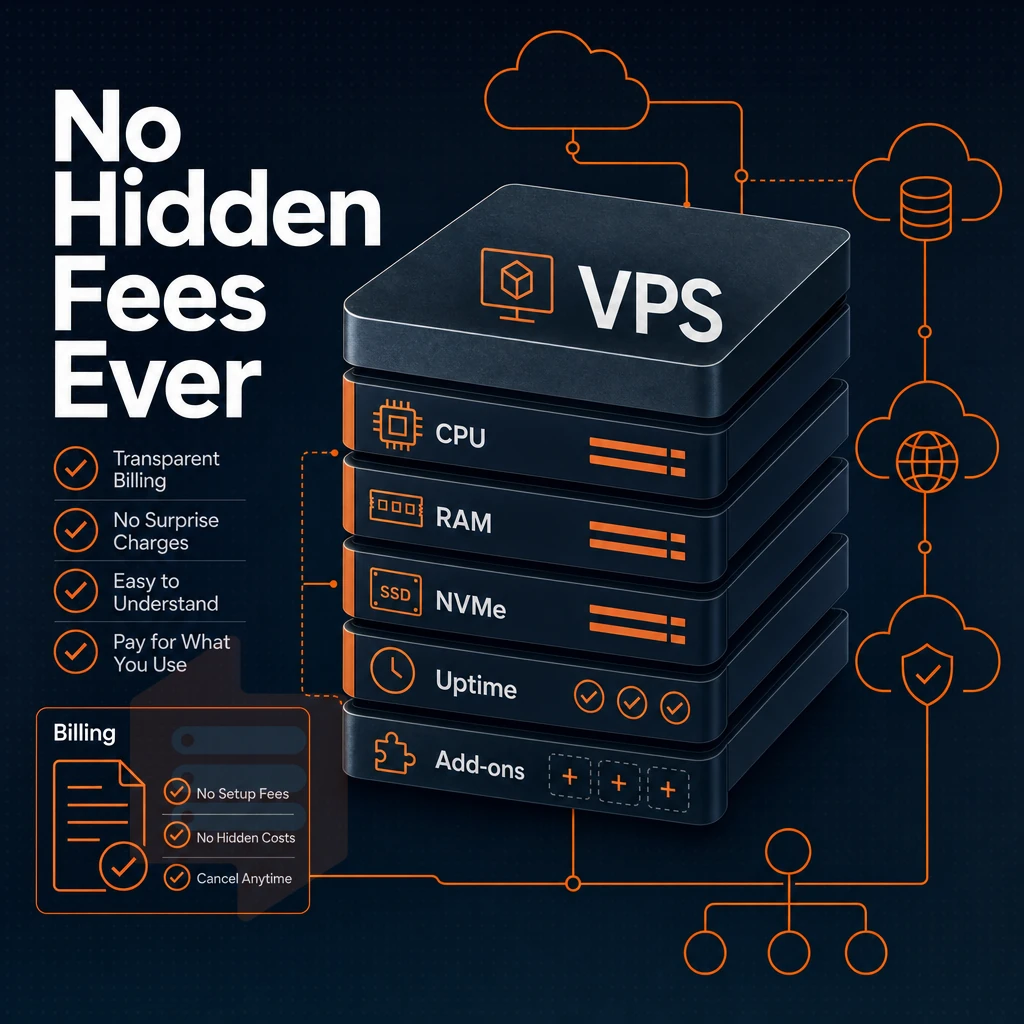
Even cheap VPS USA servers have hidden costs beyond the initial promotion price. The true cost of a cheap VPS USA server reveals itself upon renewal, after a migration, or when your host quietly caps resources on an over-sold server. The only way to discover truly competitive pricing is to learn about these ‘hidden levers’ that are used to milk customers.
What drives the true cost of cheapest VPS hosting?
There are 4 factors that increase the year-two bill of a webhosting account above what the web site’s landing page indicates. The largest factor is the renewal fee increase. For most accounts, a promotional rate is offered for the first year, and then the standard rate for that account type is charged from the 13th month and on for subsequent years.
The next largest factor is the charge for a migration of an account that has outgrown a particular hosting plan. This can include the charge to move large amounts of data as well as the charge to assign a new IP address. This can cause problems with DNS and SSL configurations. Many providers also charge separately for ssl certificates or force customers into annual certificate bundles that inflate the total cost of ownership beyond the advertised monthly rate.
Overselling host resources is another form of deception that is more subtle but can be just as bad for customers. Piling too many customers on a single server can cause serious degradation of performance under real loads. The customer pays for the full resources of the server but in reality gets only a fraction of that allocated in real terms. The architecture of KVM virtualization with hard memory caps per node as employed by BuyVPS prevents such degradation.
Be aware that even though some providers advertise “unlimited traffic”, there are many that cap burst bandwidth or even charge overage fees in the fine print. Make sure to read the provider’s acceptable-use policy before you sign up for them.
Billing terms and the flexible pricing model
Reputable hosting companies offer 3 billing cycles: monthly, one year, and two years. The monthly cycle is more expensive per month but offers the greatest flexibility. Annual billing gets you a 10-15% discount, while 2-year billing can get you up to a 20% discount.
BuyVPS uses a very flexible pricing model and does not raise the price at renewal for any term length. The price for a term of one year is the same price for a term of five years.
| Factor | Providers with teaser pricing | BuyVPS |
|---|---|---|
| Renewal hike | Common after month 12 | None, same price every term |
| Migration / IP change on upgrade | Frequent; DNS disruption likely | In-place upgrades, no IP rotation |
| Node overselling | Common on budget tiers | Hard memory caps, low node density |
| Uptime SLA | Varies; often unverified | 99.8% published SLA |
| Storage | SATA SSD or shared NVMe | NVMe RAID10 PCIe direct, 122,959 4K read IOPS measured |
Is cheap VPS hosting good enough for a website?
Caveats notwithstandng, there are entry-level VPS plans out there that come with sufficient RAM and even vCPUs to host a production website, a Node.js API or a small database. And yes, it is possible to find cheap offers, but are they really cheap or just cheaply bad?
A truly cheap VPS plan should include transparent pricing, adequate resources for your workload, and the ability to scale without surprise fees or performance degradation. When evaluating cheapest VPS hosting options, prioritize providers that publish their full pricing structure upfront and guarantee resource allocation rather than those advertising unsustainably low introductory rates.
The best cheap VPS for website hosting is the one that has a low base price and does not increase in price upon renewal. It should also have a root access and fast storage to handle a large number of simultaneous requests without a delay.
For users who prefer hands-off server administration, a managed VPS option typically includes automated updates, security patching, and monitoring services bundled into the monthly cost. Specialized configurations like WordPress hosting benefit from this foundation, where NVMe storage accelerates database queries and adequate RAM prevents plugin-induced slowdowns during traffic spikes.
Our cheap VPS offers are powered by latest AMD EPYC processors and feature NVMe RAID10 storage. Our cloud servers are based on same infrastructure and are offered at very competitive prices in US East Coast (New York) location (less than 20ms to major metro areas) and in Europe (Amsterdam location with identical hardware). Each deployment includes dedicated support from our technical team to ensure smooth configuration and ongoing operational stability. This combination of enterprise-grade hardware and strategic datacenter placement ensures delivering exceptional performance for latency-sensitive applications across North America and European markets.
Our infrastructure leverages a robust global network architecture that ensures consistent low-latency connectivity and reliable data transmission across all deployment regions. Each VPS instance ships with an intuitive control panel that simplifies server management tasks such as OS reinstalls, network monitoring, and backup scheduling without requiring command-line expertise. Our infrastructure is engineered for reliable uptime through redundant network paths, proactive monitoring systems, and hardware-level failover mechanisms that minimize service interruptions. Our support team provides direct technical assistance via ticketing system and live chat to resolve configuration issues, troubleshoot connectivity problems, and guide customers through complex deployment scenarios.
So here’s a simple decision rule for you: the cheapest VPS offer typically has hidden costs in the form of undisclosed renewal rates, poor node density policies. Additionally, Lack of a published SLA, so advertised prices are not actual prices.
Reputable hosting providers publish their renewal rates upfront and maintain transparent resource allocation policies that prevent node overselling. When evaluating cheapest VPS hosting options, verify that the provider guarantees consistent resource allocation and publishes detailed specifications for CPU, RAM, and storage rather than relying solely on promotional pricing claims.
High performance on a budget: what the specs actually mean
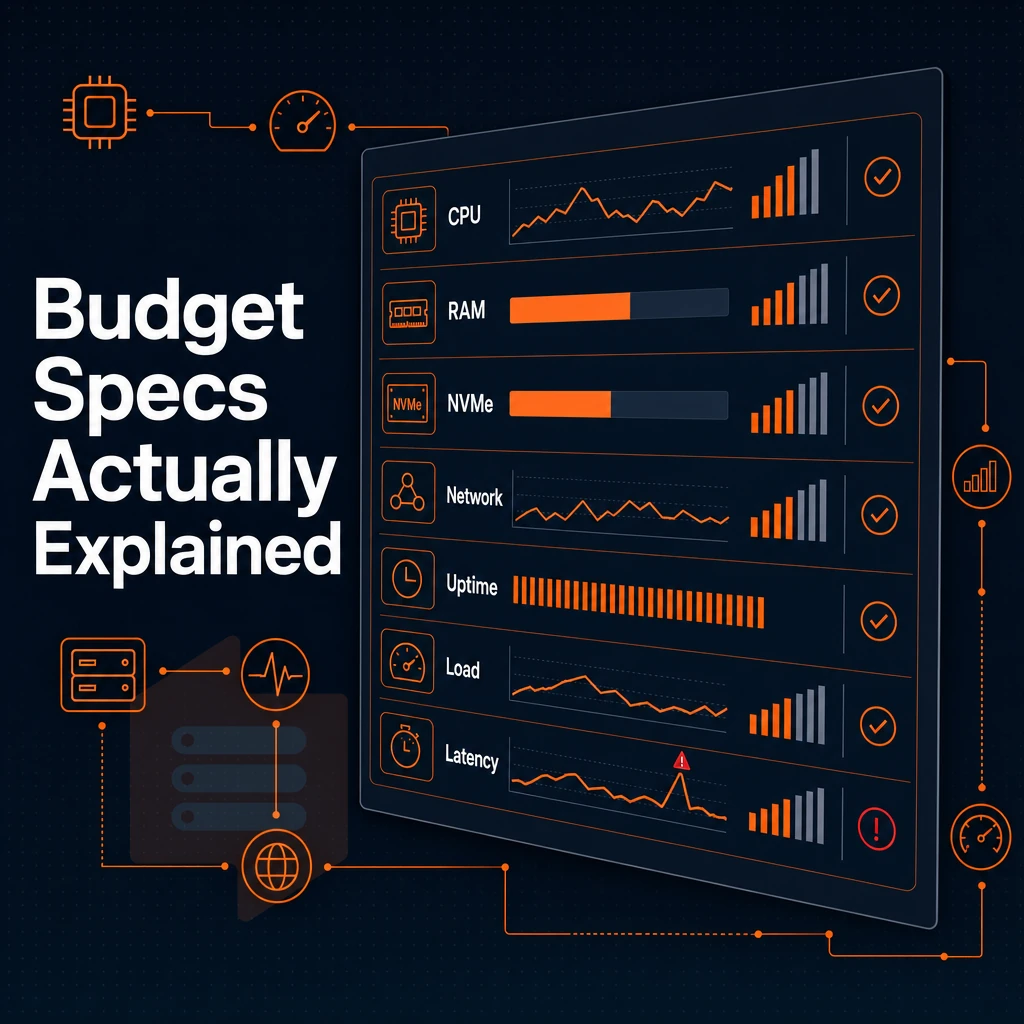
Typically cheap VPS USA hosting services will list out the specs for a potential purchase. Many people only read the top level of the specs to try to compare “apples to apples” but fail to understand the implications of the specs on actual server performance. This article will help you to understand the key points of the server’s hardware so you can make a smart purchase and avoid disappointment.
Shared vcpu vs dedicated-core VPS hosting explained
Of all the specs listed for VPSes, this is the most important. A shared vCPU is a virtual CPU that is time-sliced between many users to form the logical CPU. A dedicated-core VPS, on the other hand, allocates a completely physical and dedicated core to a VPS, no other users on that core, ever.
Shared vCPU plans can randomly throttle under sustained loads, but dedicated cores are consistently scheduled for CPU time. So for high latency workloads like databases, real-time APIs and compiled apps, CPU cores matter more than raw MHz.
Both tiers are offered by BuyVPS. For those seeking cheap VPS hosting options, the Standard CPU tier runs on shared vCPUs on AMD EPYC Milan processors, while the Dedicated CPU tier locks to cores on AMD EPYC Genoa processors with lower memory latency using DDR5 ECC RAM.
Evaluating the full hardware stack
The type of CPU is just one variable. Work your way through the different layers of the VPS infrastructure.
- Please verify the type of RAM being used. Reliable and widely used DDR4 ECC memory is standard. DDR5 ECC memory (used on BuyVPS Dedicated CPU plans) adds even higher bandwidth and more reliable error correction. For very memory intensive scripts the difference between the two generations is noticeable.
-
Check storage architecture, not just the label. "SSD storage" on a listing can mean anything from a shared SATA pool to NVMe RAID10 on PCIe direct. BuyVPS publishes fio benchmark results, 122,959 4K read IOPS measured, so you are not guessing. SATA SSD storage tops out well below that figure.
Note: A provider that does not publish storage benchmarks is asking you to trust marketing copy. Demand measured IOPS before signing up. - Check your server’s uplinks. Servers with multiple uplinks (multi-homed) will send traffic via other uplinks in case one of the uplink carriers has a failure. BuyVPS operates multi-homed Internet connections in Amsterdam and New York and all servers are configured with IPv4 and IPv6 dual-stack on all plans.
- How many nodes are on a host? Oversold nodes can kill server resources for all tenants on a host. The hard memory caps and low node density that are characteristics of the BuyVPS design protect the performance headroom you paid for.
Verifying claims with published benchmarks
On a sales page specs are promises, benchmarks are proof. BuyVPS publish Geekbench 6 results for CPU benchmarks, fio results for storage benchmarks, and pgbench results for database benchmarks. This covers the 3 main layers that most applications test the most.
Ask the cheap VPS USA host if they provide equivalent numbers for their offerings. Is the isolation of a dedicated server class being provided with concrete, repeatable benchmark data to back up performance claims? This is what high performance looks like, not just a marketing term, and it is reproducible and documented, not claimed.
Cheap VPS USA plans: standard, dedicated-core, and high-memory tiers compared
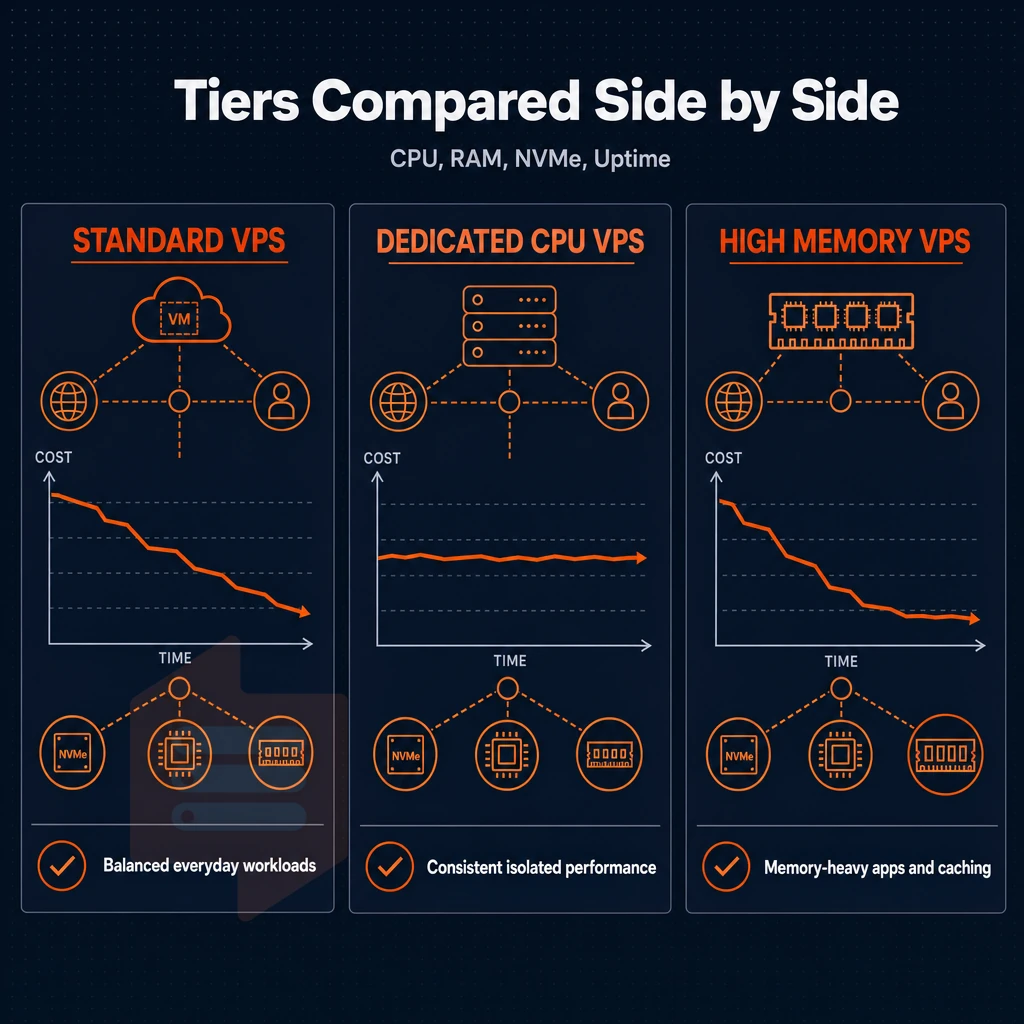
Not every workload needs the same kind of VPS hosting. Our three tiers of hosting (Standard CPU, Dedicated CPU, and High Memory) are optimized for different workloads and are all offered from our data centers in the US. Choosing the right plan from the get-go means you can avoid over-allocating resources and pay a fixed price for your VPS.
How the three tiers differ at the hardware level
Our Standard CPU (S-tier) offers shared vCPUs running on AMD EPYC Milan processors with DDR4 ECC RAM and NVMe storage. This is our cheapest VPS designed for developers, for staging servers and for low traffic web sites. Time sharing the vCPUs of a server with other tenants means that although very efficient, there can be very short periods of contention under burst traffic.
For the Dedicated CPU (D-tier) we’re moving to AMD EPYC Genoa processors with DDR5 ECC memory and pinned vCPUs. By pinning vCPUs we remove the scheduler contention that shared vCPUs in other tiers experience. Latency-sensitive workloads like real-time APIs, continuous integration / continuous delivery. Additionally, Even games servers will particularly benefit from this new D-tier, which behaves very much like a dedicated server but without the overhead of bare metal.
High Memory (H-tier) instances are based on the same EPYC Milan silicon but reverse the memory to vCPU ratio to 1:8 (i.e. 8vCPUs * 192GB of RAM or larger). In-memory databases, very large analytics workloads and other JVM-dominated workloads will run entirely in memory and otherwise swap.
Does cheap VPS hosting come with full root access?
Yes. Full root access, KVM isolation and separate kernel for each VPS are included with every tier of linux plans (S, D, and H). You can install, configure and use as you see fit, including your own packages, firewall, and even loading in your own ISO images. No managed services are included by default and there is no restriction on use of SSL certificates and software packages. All of our linux plans are fully self-managed.
Tier comparison at a glance
| Tier | vCPU type | RAM | Storage | Best for |
|---|---|---|---|---|
| Standard CPU (S) | Shared, EPYC Milan | 4 GB, 64 GB | NVMe RAID10 | Web apps, dev/staging, small databases |
| Dedicated CPU (D) | Pinned, EPYC Genoa | 4 GB, 32 GB | NVMe RAID10 | APIs, CI/CD, game servers, low-latency workloads |
| High Memory (H) | Shared, EPYC Milan | 64 GB, 192 GB | NVMe RAID10 | In-memory databases, analytics, JVM stacks |
All 3 VPS tiers are available in both our data center locations (New York and Amsterdam). For teams looking for high quality VPS USA hosting with competitive pricing and a no-oversell guarantee, BuyVPS hard-caps memory per node and keeps densities low. This policy applies to all VPS plans, not just our high-end tiers.
US east coast data center: new york latency for north america
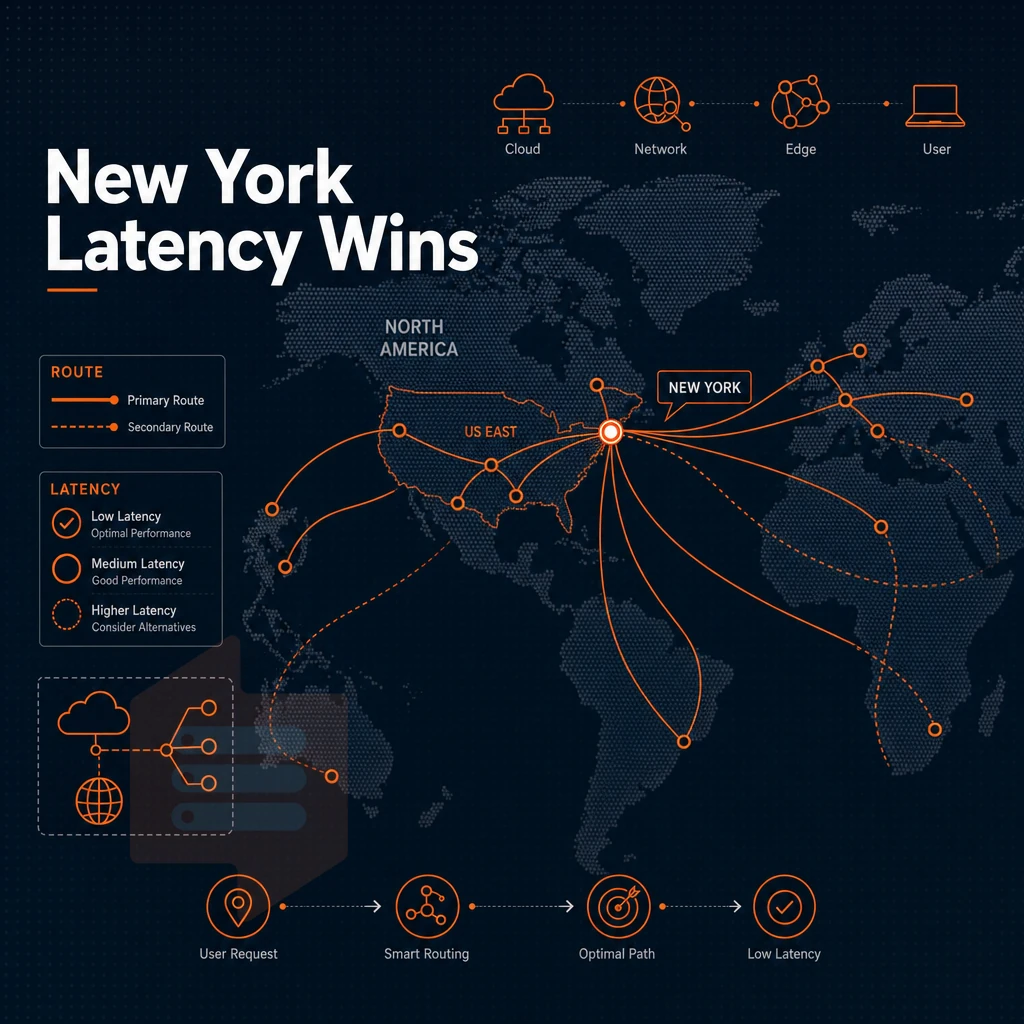
The New York data center places your workloads at the geographic heart of US East Coast connectivity. Close to major population centers of North America, it delivers low latency to your customers. Simultaneously, workloads that require both coasts to be covered are given a direct connection across the Atlantic.
Why the new york data center matters for US traffic
The physical proximity of a VPS server to users influences round-trip time. Thus a VPS server hosted in New York will have lower latency to users in the eastern United States and Canada than to users in Europe for example when hosted in a data center there.
Our multi-homed uplinks spread the load between several transit providers to avoid single-point failures. On the edge of the network we actively filter vast amounts of traffic to prevent abuse from filling up your server’s bandwidth. That leaves you with a fast and responsive us VPS under any load.
- IPv4 + IPv6 dual-stack on all plans. No special config required.
- Multi-homed uplinks for path redundancy.
- Edge filtering against volumetric threats.
- 99.8% uptime SLA backed by our infrastructure commitment.
Identical hardware and VPS hosting solutions across both regions
We run identical AMD EPYC servers, NVMe RAID10 storage and KVM hypervisors in our New York and Amsterdam data centers. Our pricing is also identical for both locations. If you’re running transatlantic deployments, this means you get to enjoy identical performance without being charged a premium for the location.
All plans include full root access. Basic server management tasks (reboots, OS reboots, console access etc) are provided through our self-service interface. API access and in-browser VNC are also provided for such operations. No tickets are required for standard server management tasks.
We currently offer many different Linux distributions including Ubuntu, Debian, AlmaLinux, Rocky Linux, CentOS Stream and Fedora. Note that we do not currently offer any Windows VPS configurations, including Windows Server based VPS configurations. All of our managed VPS plans are a separate product from our root access VPS plans and come with the full support of our engineering team.
Is there a free trial available for USA VPS hosting?
No free trial offered here, folks. Simple monthly billing for however long you want to keep a server on, and that’s your commitment for as long as you choose to keep it on. The best test is to deploy a server and run your own benchmarking tests and scale as needed.

Root access, control panel, and OS options on a budget VPS
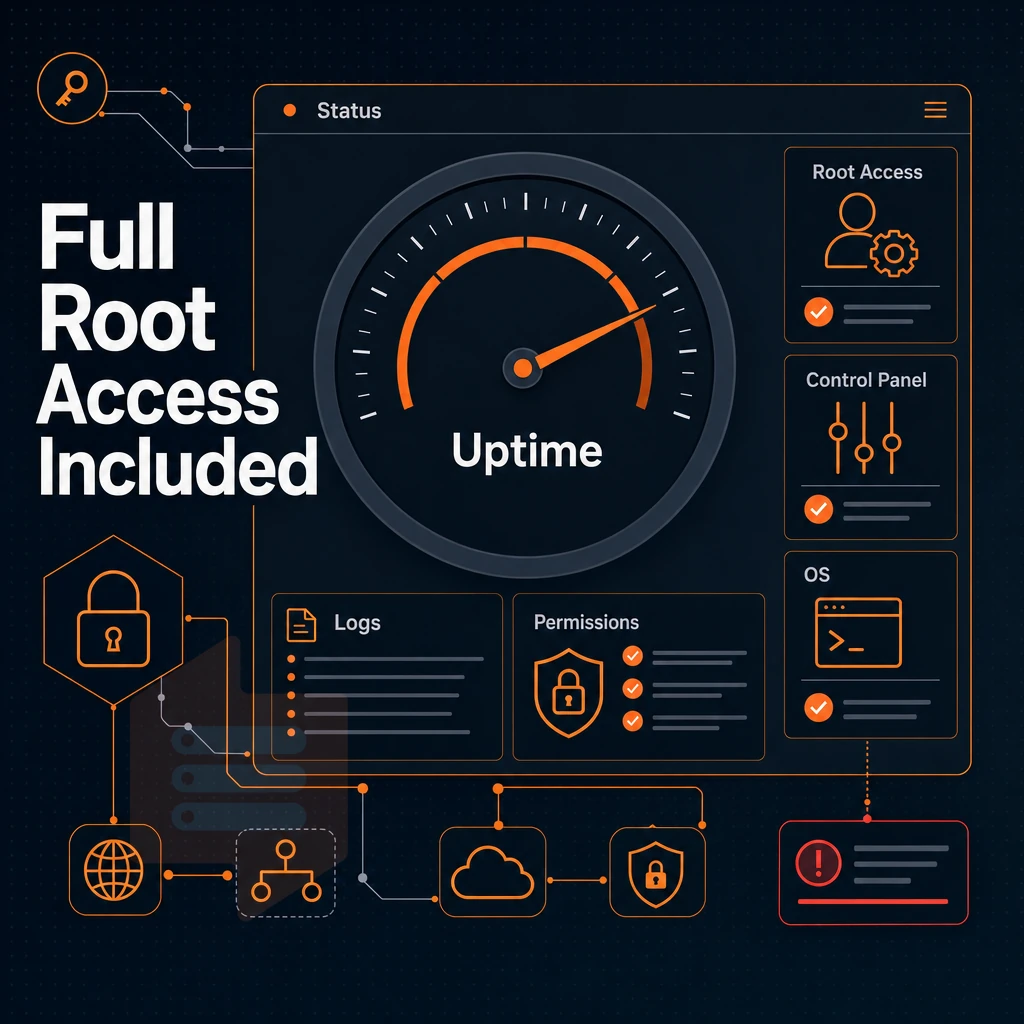
Most people look at the specs of a cheap VPS USA offer, but also want to know about root access and flexibility to alter settings etc. as well as choices for OS and how to upgrade when needed. Here is how we handle all of these issues at BuyVPS.
Full root access to your virtual private server environment
Every BuyVPS offer comes with full root access by default. No limited ssh shell or managed only plans. With cheap VPS hosting, developers and system administrators get full and unrestricted access to all of a server's facilities: kernel parameters, custom daemons, firewall setup, and more, all without any interference from the platform.
Virtual machines without root access are essentially shared-hosting accounts that cost more. Root access on a VPS hosting environment enables users to compile their own software, run Docker and LXC containers, work with SELinux policies, and even perform OS-level benchmark tests, all things that cannot be done with locked-down hosting plans.
Intuitive control panel and OS options
The BuyVPS control panel is very easy to use. There is API access and an in-browser VNC console. You can reboot, reinstall or even snapshot a server without ever having to open a ticket. The API can be used to automate server provisioning from within your CI/CD processes.
BuyVPS supports many of the most common production stacks on Linux, including Ubuntu, Debian, AlmaLinux, Rocky Linux, CentOS Stream and Fedora. If your desired distro isn’t on this list, you can upload your own custom ISO on every plan. Note that we don’t offer a free website migration service, this is a self-managed service for you.
One operational advantage of upgrades being in-place is that there is no migration window, no IP rotation and no DNS propagation required. Instead, you simply resize the relevant operating system resources and you are good to go.
Which US data center location is best for low latency?
We operate a single location in the US, in New York. For East Coast customers and workloads that are mostly located across the Atlantic, round-trip times to the North America and Europe endpoints are excellent. For a European audience, our Amsterdam location (identical hardware to the New York location, same control system) is a better choice. Both locations are covered by a 99.8% uptime SLA.
| Dimension | New York (US East) | Amsterdam (EU) |
|---|---|---|
| Best for | North American users, transatlantic apps | European users, GDPR-sensitive workloads |
| Hardware | AMD EPYC, NVMe RAID10 | Identical, same node spec |
| Uptime SLA | 99.8% | 99.8% |
| IPv4 + IPv6 | Dual-stack, all plans | Dual-stack, all plans |
Choose New York if your users are mostly in the Americas, Amsterdam if lowest latency to Europe is most important. The best VPS for your workloads are the ones closest to your end users. You can deploy VPS in both regions without change to plans or pricing via BuyVPS.
Does a free trial or money-back guarantee matter when buying cheap VPS?
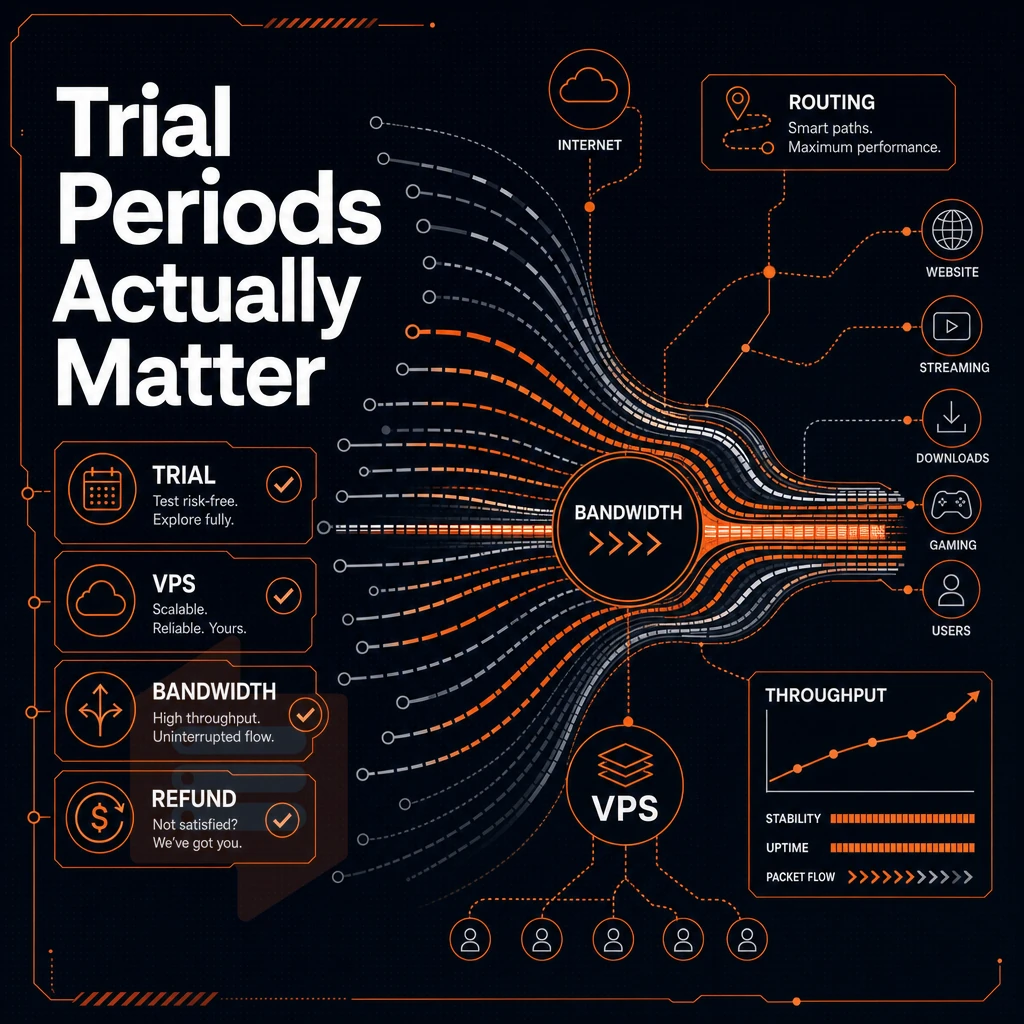
Looking at a host’s trial and refund policies can tell you a lot about how much they actually believe in their hosting. So before you sign up for some cheap VPS USA offer take a few minutes to read up on the hosts money back guarantee in case their VPS offer does not live up to the host’s promise.
Understanding the three policy types
Risk protection at VPS hosting providers is set up in vastly different ways. Most people get this wrong, but it’s a serious mistake with big consequences.
- Free trial: A limited-time access window, often 7 to 30 days, where you test the platform at no charge. Some web hosting segments, such as WordPress hosting, use this model heavily. Pure VPS tiers rarely do, because provisioning real hardware has real cost.
- Money-back guarantee: You pay upfront, then claim a refund within a defined window if unsatisfied. The money back period varies widely, read the fine print for exclusions on setup fees or bandwidth overages.
- Cancel-anytime policy: No fixed refund window. You stop paying when you stop using the service. BuyVPS operates on this model, cancel any time, no lock-in, no renewal hike in year five.
Note: Some web hosting plans advertise a free trial but bury activation requirements or credit-card holds in the terms. Always read the cancellation clause before provisioning.
What to check before signing up
- Know exactly what kind of policy it is, a trial period, guarantee or a cancel-anytime offer. Their financial risks are very different and most premium VPS providers clearly state this on their pricing page.
- See what is excluded such as setup fees, IP addresses and additional domain name add-ons which are usually non-refundable.
- Check the billing cycle for your service. Shortest exposure time is to provide monthly billing with cancel anytime. Annual prepay with no refund of unused portion in contract is a locked in risk.
Can i upload a custom ISO to a cheap VPS hosting plan?
This is one area where BuyVPS differs meaningfully from other hosts serving a budget-oriented market, many of whom confine their entry-level plans to a fixed list of supported OSes. All of BuyVPS's VPS server plans, every one, on both Amsterdam and New York servers, allow upload of custom ISOs: so you can put whatever Linux distribution (or indeed whatever BSD distribution.
Alternatively, Custom appliance) you need onto a server and boot it, without ever needing to get in touch with support. For serious workloads, this is more relevant than a free trial.
Common use cases for cheap VPS hosting in the USA
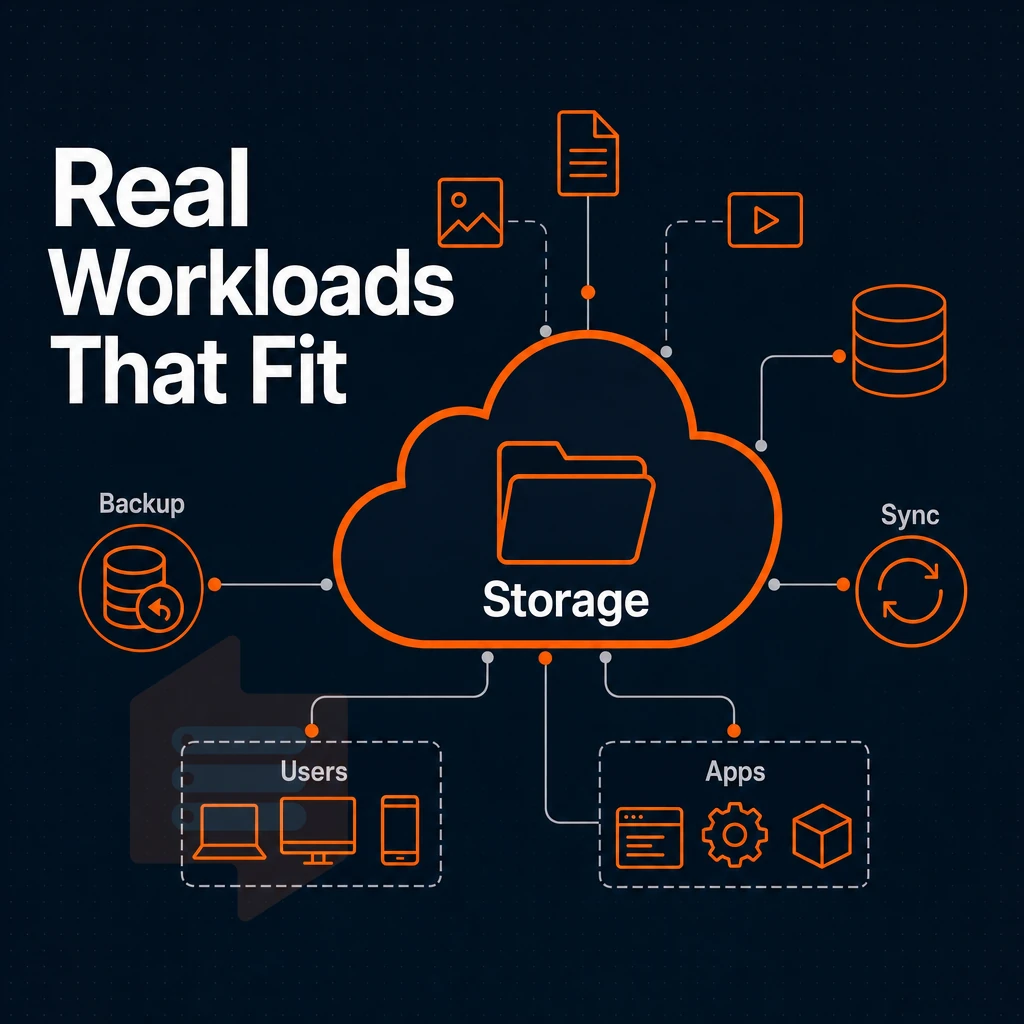
USA-based virtual servers are not commodities. How you intend to use a VPS (e.g. production server, development server) will typically determine which of our VPS plans are suitable. How much RAM and how much NVMe storage is required and whether or not East Coast proximity is a ‘requirement’ or merely a ‘nice to have’. Below are listed some of the more common production and development workloads and the mechanism behind the location’s relevance to each.
VPS hosting, app servers, and database backends
As websites grow they typically outgrow shared hosting environments, and cannot guarantee resources in them. Running a WordPress or Laravel stack on a linux VPS is ideal as you get to tune PHP-FPM worker counts. Set innodb_buffer_pool_size to match your physical RAM and reload your Nginx config without requiring to open a support ticket.
Results from published pgbench tests on high-end VPS hosting hardware such as NVMe RAID10 configurations offered by BuyVPS show dramatically higher transaction throughputs than what can be achieved with a spinning-disk physical server. For a read-heavy database such as Postgres, the difference in performance translates to query latency that your users experience.
Applications such as API servers also benefit from fast storage. A Node.js or Python web application on cheap VPS hosting that performs many small reads benefits greatly from having fast storage such as a PCIe-direct NVMe device versus a slow network-attached block device even under load.
Cloud infrastructure for ci/cd and staging
CI/CD pipelines require stable and isolated test environments. VPSes give each such pipeline its own kernel (as opposed to other builds interfering ‘noisy neighbors’). Additionally, Environments running on KVM-isolated cloud servers from quality hosting providers complete builds in a timely and predictable manner, different from what might happen with slower builds obstructing releases.
Even development and staging environments mirror the production setup most precisely when they are running on the same hypervisor and OS stack. Thus after the sprint simply clone the second VPS, revert the snapshot and shut it down. In-place-updates even preserve the staging IP for the duration of the project.
VPN endpoints, proxies, and game servers
For latency sensitive services (e.g. VPN endpoints, SOCKS5 proxies, game servers) it makes a big difference where users are from geographically. With a usa VPS hosted on the USA East Coast you’re closest to the largest user base for North America, within 10-20ms of most users. That 10-20ms delay difference is audible in voice communications and visible when playing online games against others.
Installing and setting up to use a VPN and/or proxies on a us VPS with full root access is relatively simple. You can set up WireGuard or OpenVPN to use the included IPv6 address as a secondary IP address on the tunnel. We include a full /64 IPv6 range on IPv6 enabled servers.
All of our plans include a full /32 IPv4 range as well as a full /64 IPv6 range, no extras. And all of this can be added to any of our VPS hosting plans without even looking at the plans or ordering add-ons.
How to choose the best VPS hosting for your budget and workload
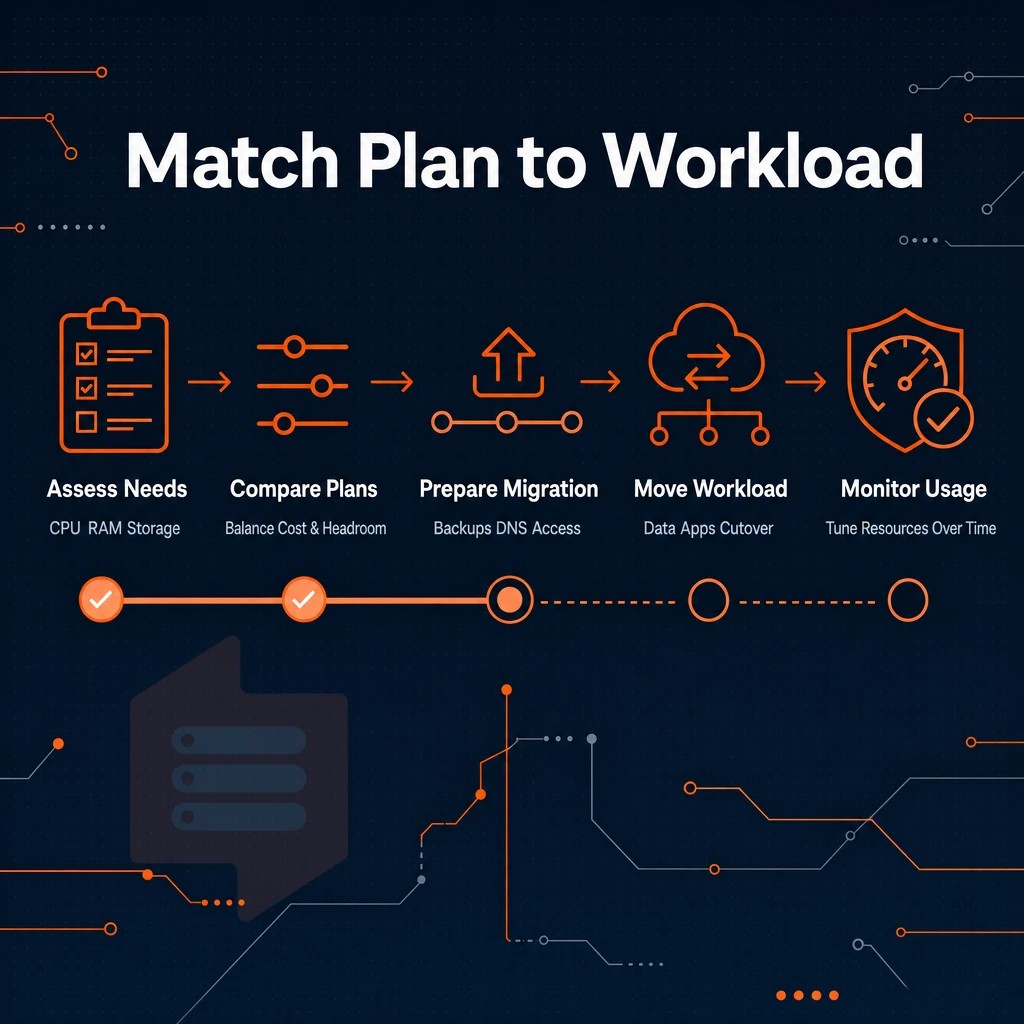
Choosing the best cheap VPS in the USA involves making six key decisions. Get these right and you’ll avoid paying for unused resources and sinking your cash into underpowered servers that will crash under real usage.
Step 1: size your RAM, CPU, and storage
First off, RAM. You’ll want at least 4 GB for a busy Laravel application or PostgreSQL database, to avoid thrashing. After that, CPU: shared vCPUs are typically fine for typical web work, but for Continuous Integration and Development, and real-time processing, you want to pin those CPUs.
Measuring Storage IOPS is more important than total capacity for databases with high volume of small transactions. Such databases require infrastructure that supports NVMe IOPS, not slow SAS arrays disguised as SSDs. We guarantee the measured 4K read IOPS for our infrastructure, something most hosting services refuse to publish.
A practical example for sizing would be a mid-traffic e-commerce site with a separate database process. This would fit on a 2 vCPU / 4 GB / NVMe configuration, the entry point to our Standard CPU tier offerings.
Step 2: evaluate location and provider integrity
For US users, New York is the best location. For EU users, Amsterdam is the best location. Because of the way latency compounds with every request, proximity to your users is key to a good VPS hosting experience.
Many providers quietly reduce the value of their service over time by implementing renewal pricing. Unlike many hosting providers, we do not implement any increases in our standard VPS server charges after the first year and charge the same price in year five as we did in year one, no surprises and no renegotiation required.
Check the no-oversell policy. Most hosting providers these days overload their nodes with too many tenants to maintain low prices for themselves. We enforce a hard memory cap per node and have a low node density to ensure that all memory you paid for is allocated to you as stable hosting and not consumed by your neighbors on a shared hosting account.
Step 3: verify customer support depth
Rather than using chatbots to read through scripted answers to problems with your database, a team of engineers are there to support you in resolving incidents quickly. Nobody wants to be woken up at 2AM to find that their database has crashed. You need someone who can read a kernel panic in a few seconds and get to the bottom of things for you quickly.
We offer phone support in addition to email support. Reliable hosting also depends on who answers your phone call versus who is running your server in the data center.
Why choose BuyVPS for cheap VPS hosting in the USA?
Finding cheap VPS hosting in the USA that doesn't cut corners on performance is harder than it sounds. Most hosting providers oversell nodes, throttle resources at peak hours, and quietly raise prices at renewal. BuyVPS is built differently, and the specs back that up.
Our New York data center puts your VPS server on US East Coast infrastructure with low latency to major North American population centers. Every plan runs on KVM virtualization with a separate kernel per VPS, true isolation, not a shared container. That means dedicated resources behave like a dedicated server, regardless of what neighboring workloads are doing.
- No-oversell guarantee: hard memory caps per node and low node density keep consistent performance across your lease term.
- NVMe RAID10 PCIe-direct storage: 122,959 4K read IOPS measured, faster than any SATA SSD storage tier you'll find on a cheap VPS plan.
- Full root access + custom ISO: every virtual private server ships with complete OS control. Deploy any Linux VPS image or upload your own.
- No renewal hike: same price in year five as year one, a genuinely flexible pricing model for long-running workloads.
- In-place upgrades: scale your VPS plans without migration or IP rotation.
- Engineer-staffed support: real engineers reply, not first-tier chatbots, backed by a dependable provider that has been founder-run since 2002.
If reliable VPS hosting in North America at a competitive price is what you need. Explore our full range of cheap VPS USA options on the cheap VPS plans page or reach out to our team to compare configurations.
What separates reliable USA VPS providers from budget traps
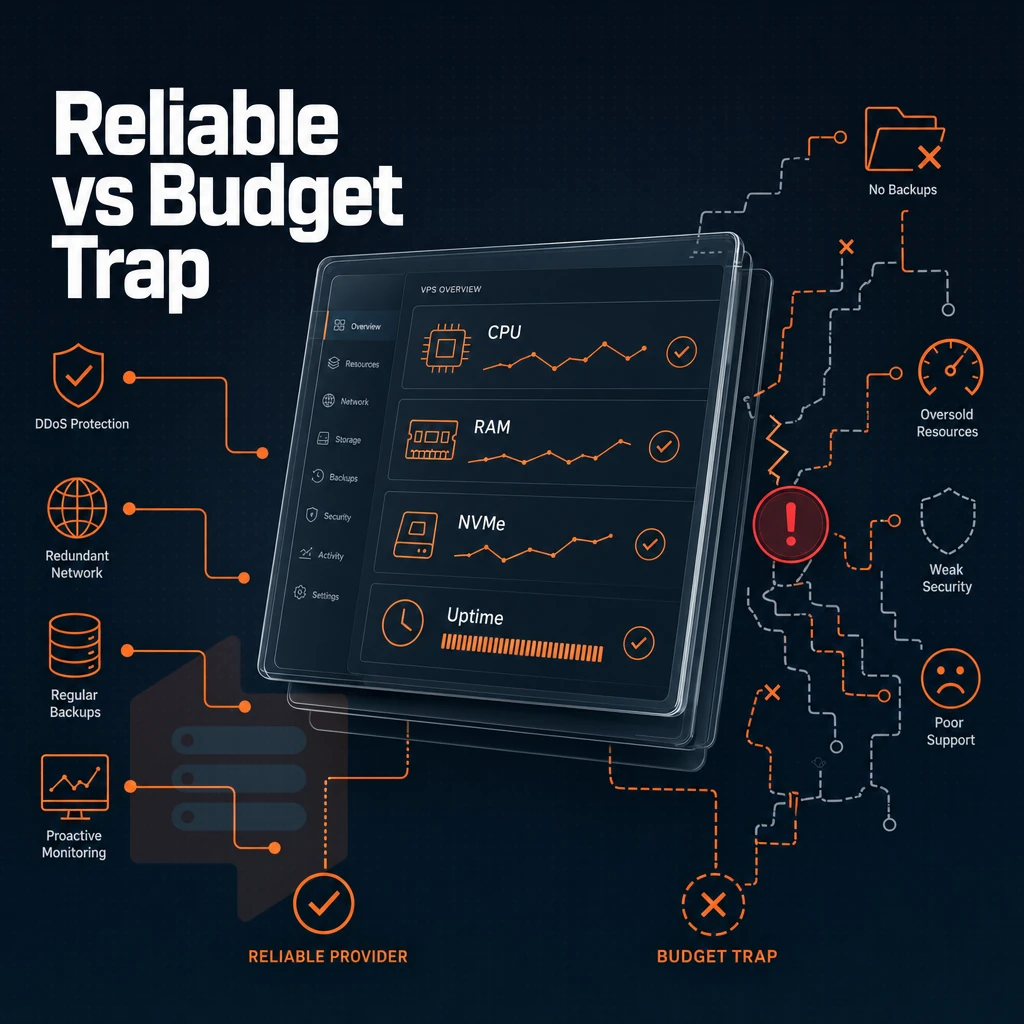
The cheap VPS USA plans being promoted by many companies advertising hosting services are not offered by traditional hosting providers. Many of these companies are in fact resellers providing layered hosting services on top of another providers' infrastructure. As a reseller you will experience the added layer of a middleman and have less flexible support options.
The worst part is that you have no idea which hosting providers are actually running the VPS server your services depend on, and you have no direct relationship with the hardware or the people responsible for it. You will open a ticket with the reseller at 2 AM when something breaks and they will open a ticket with the upstream provider and you will have to wait. In the meantime a direct provider would have sent a technician to fix the problem by now.
Who owns the physical infrastructure of a server matters more than most people think. A company that owns its own servers and is colocated in a data center can list out all the real details of their hardware (e.g. the specific CPU model, storage controller, how the network uplinks are set up, etc. as well as the redundancy of the power and cooling systems).
In contrast, vague descriptions such as 'high-performance hardware' or 'enterprise-grade servers' without listing out the specific model numbers of the hardware are strong indications that virtual server hosting providers either do not control the hardware or are trying to hide subpar hardware configurations.
Support quality is another important way to distinguish between legitimate providers and budget traps. A company that offers KVM VPS on AMD EPYC hardware with NVMe storage should be able to provide detailed information on CPU steal rates, IOPS limits per VPS and live migrations. If a pre-sales chat cannot answer simple questions like these, the gap in support will only widen once you are a paying customer and something goes wrong.
Another useful filter is a provider’s transparent pricing history. We’ve seen many introductory prices on VPS hosting rise sharply at renewal time, so that what seemed like a very cheap VPS offer by month 1 is expensive by month 13.
Check the standard renewal price for any VPS server or hosting plan you're considering, as well as the initial price, and make sure the plan details confirm that all allocated resources are fixed, and not subject to limits or throttling at peak times. A simple, flat monthly fee for a dedicated-core VPS with a published CPU model and guaranteed IOPS is all you should need to consider. Any more complexity deserves close scrutiny.
Check if the provider lists a specific US location for their data center or if they simply state “USA”. The latency to users on the East Coast can differ greatly between a New York/New Jersey based data center and a data center located in Dallas or Los Angeles. A provider that lists specific geography for their US-based data centers is generally more transparent about all of the provider’s characteristics.
The best cheap VPS hosting USA: key takeaways for buyers
Finding the best cheap VPS USA comes down to a short checklist. Demand hardware transparency, know whether your VPS server runs on shared or dedicated resources, and confirm KVM virtualization isolates your environment from neighbors. Verify the no-oversell policy: a cheap VPS hosting deal that packs too many virtual machines onto one physical server destroys consistent performance.
Check renewal pricing honestly; the cheapest VPS at signup often isn't the cheapest VPS in year three. Confirm full root access, your preferred operating system, a US-based data center, and a support team staffed by engineers rather than scripts.
BuyVPS checks every box. USA VPS deployments run from a New York data center on AMD EPYC hardware with NVMe SSD storage, hard memory caps that enforce the no-oversell promise, and pricing that never hikes at renewal. Root access and KVM isolation come standard on every VPS plan. For buyers who need reliable VPS hosting in North America without hidden costs, BuyVPS is the dependable provider the rest of this article points toward.
A cheap VPS in the USA isn't just about the lowest sticker price. The real measure is what you get per dollar: dedicated or shared EPYC cores, NVMe RAID10 storage, and a network built for consistent latency, not a race to the bottom on specs. Hidden costs like renewal hikes and forced migrations erode savings fast; a provider with flat pricing and in-place upgrades keeps your total cost predictable.
For teams that need US East Coast coverage, New York-based infrastructure on KVM with full root access and no-oversell guarantees is the baseline worth demanding. BuyVPS delivers exactly that kind of reliable VPS hosting, with Standard, Dedicated-Core, and High-Memory tiers from a single New York data center, engineered for workloads that can't tolerate noisy neighbors or surprise fees.
Ready to see which plan fits your stack? Browse BuyVPS VPS plans and configure your New York server today.